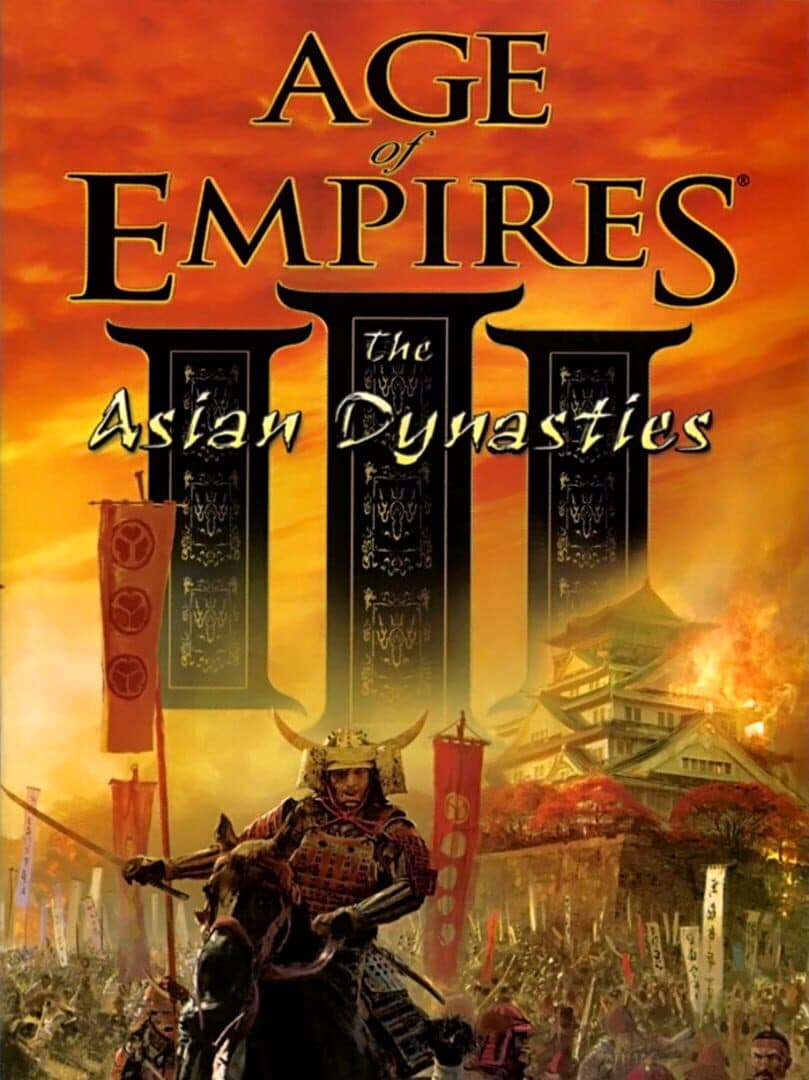
Age of Empires III: The Asian Dynasties
Can your GPU run this game?
Estimated FPS across quality settings and resolutions
Search for your GPU above to see a full FPS breakdown at every quality and resolution.
Age of Empires III: The Asian Dynasties FPS by GPU
Estimated framerates for 14 reference GPUs · pick a resolution and quality
Full benchmark grid · 14 GPUs × 4 qualities × 3 resolutions
1080p performance
| GPU | low | medium | high | ultra |
|---|---|---|---|---|
| RTX 5090 | 999 fps | 999 fps | 999 fps | 999 fps |
| RTX 4090 | 999 fps | 999 fps | 999 fps | 999 fps |
| RX 7900 XTX | 999 fps | 999 fps | 999 fps | 999 fps |
| RTX 5080 | 999 fps | 999 fps | 999 fps | 999 fps |
| RTX 4080 Super | 999 fps | 999 fps | 999 fps | 999 fps |
| RTX 4070 Ti | 999 fps | 999 fps | 999 fps | 937 fps |
| RTX 4070 | 999 fps | 999 fps | 988 fps | 803 fps |
| RX 7800 XT | 999 fps | 999 fps | 871 fps | 707 fps |
| RTX 3080 | 999 fps | 999 fps | 847 fps | 688 fps |
| RTX 4060 Ti | 999 fps | 999 fps | 800 fps | 650 fps |
| RTX 3070 | 999 fps | 912 fps | 729 fps | 593 fps |
| RTX 4060 | 999 fps | 824 fps | 659 fps | 535 fps |
| RTX 3060 | 882 fps | 706 fps | 565 fps | 459 fps |
| GTX 1660 Super | 640 fps | 512 fps | 409 fps | 333 fps |
1440p performance
| GPU | low | medium | high | ultra |
|---|---|---|---|---|
| RTX 5090 | 999 fps | 999 fps | 999 fps | 999 fps |
| RTX 4090 | 999 fps | 999 fps | 999 fps | 999 fps |
| RX 7900 XTX | 999 fps | 999 fps | 999 fps | 999 fps |
| RTX 5080 | 999 fps | 999 fps | 999 fps | 946 fps |
| RTX 4080 Super | 999 fps | 999 fps | 999 fps | 889 fps |
| RTX 4070 Ti | 999 fps | 999 fps | 865 fps | 703 fps |
| RTX 4070 | 999 fps | 926 fps | 741 fps | 602 fps |
| RX 7800 XT | 999 fps | 816 fps | 653 fps | 531 fps |
| RTX 3080 | 993 fps | 794 fps | 635 fps | 516 fps |
| RTX 4060 Ti | 938 fps | 750 fps | 600 fps | 488 fps |
| RTX 3070 | 855 fps | 684 fps | 547 fps | 444 fps |
| RTX 4060 | 772 fps | 618 fps | 494 fps | 401 fps |
| RTX 3060 | 662 fps | 529 fps | 424 fps | 344 fps |
| GTX 1660 Super | 480 fps | 384 fps | 307 fps | 249 fps |
4K performance
| GPU | low | medium | high | ultra |
|---|---|---|---|---|
| RTX 5090 | 999 fps | 988 fps | 791 fps | 642 fps |
| RTX 4090 | 999 fps | 918 fps | 734 fps | 596 fps |
| RX 7900 XTX | 999 fps | 824 fps | 659 fps | 535 fps |
| RTX 5080 | 971 fps | 776 fps | 621 fps | 505 fps |
| RTX 4080 Super | 912 fps | 729 fps | 584 fps | 474 fps |
| RTX 4070 Ti | 721 fps | 576 fps | 461 fps | 375 fps |
| RTX 4070 | 618 fps | 494 fps | 395 fps | 321 fps |
| RX 7800 XT | 544 fps | 435 fps | 348 fps | 283 fps |
| RTX 3080 | 529 fps | 424 fps | 339 fps | 275 fps |
| RTX 4060 Ti | 500 fps | 400 fps | 320 fps | 260 fps |
| RTX 3070 | 456 fps | 365 fps | 292 fps | 237 fps |
| RTX 4060 | 412 fps | 329 fps | 264 fps | 214 fps |
| RTX 3060 | 353 fps | 282 fps | 226 fps | 184 fps |
| GTX 1660 Super | 256 fps | 205 fps | 164 fps | 133 fps |
Where to buy
Age of Empires III: The Asian Dynasties
affiliate
Minimum Hardware
* Amazon links are affiliate links. We may earn a commission at no extra cost to you.
About
Age of Empires III: The Asian Dynasties, released in 2007, is a celebrated expansion pack for the real-time strategy game Age of Empires III. This notable addition allows players to command unique Asian civilizations such as the Japanese, Chinese, and Indians, each with distinct units and powerful wonders. Featuring gameplay that combines resource management, strategic warfare, and historical context, it enhances the series' reputation and offers fresh experiences for both veterans and newcomers.
In terms of PC performance, Age of Empires III: The Asian Dynasties is quite accessible, requiring a minimum entry-level GPU with a score of around 300. Most modern systems, even with mid-range graphics cards, can easily achieve solid FPS while running the game at decent graphics settings. For optimal gameplay, consider GPUs from the entry-level tier, allowing players to experience smoother frames per second and better overall performance.
If you enjoy real-time strategy games, Age of Empires III: The Asian Dynasties comes highly recommended, boasting a commendable rating of 82/100. Its engaging gameplay and unique civilizations provide a rich gaming experience that stands the test of time, making it a worthwhile addition to your PC gaming library.
Performance profile
October 2007 release. Age of Empires III: The Asian Dynasties targets mid-2000s-to-early-2010s hardware — any modern entry-level GPU (GTX 1650 tier or newer integrated graphics) handles it at 1080p Ultra without breaking a sweat.
Extremely light — Age of Empires III: The Asian Dynasties runs at 60 FPS 1080p on any integrated GPU (Intel Iris Xe, AMD Radeon Graphics) or a decade-old discrete card like the GTX 1050. A current-gen RTX 4060 pushes 4K Ultra without effort.
Storyline
Campaigns There are three new campaigns, one for each new civilization. Furthermore, these campaigns return to the historical, civilization-based single-player campaigns, which are different from the past campaigns in the Age of Empires III series. Each campaign consists of five new scenarios. They are the first campaigns in the Age of Empires III series to not revolve around the fictional Black family. Japanese campaign — The Japanese campaign focuses on the unification of Japan (the beginning of which was also a scenario in Age of Empires II: The Conquerors), the establishment of the Tokugawa Shogunate, which players control, and a young general named Sakuma Kichiro. Apparently, when Kichiro was a baby, Tokugawa Ieyasu rescued him from the ruins of his conquered village and raised him as his adopted son. The campaign begins when Kichiro meets up with Daimyō Torii Mototada, at the siege of Osaka (transported from 1615 to 1600) to capture the 5-year-old heir of Hideyoshi. Kichiro and Mototada ally with the local villagers and storm the castle. Next, they move to the north-east of Honshu to destroy any villages that might support Tokugawa's enemy, Uesugi Kagekatsu and defeat Uesugi's army. After the victory, in which they suffer heavy losses, Mototada learns that Tokugawa's main enemy, Ishida Mitsunari is threatening Mototada's estate at Fushimi, forcing Mototada to return there. Meanwhile, Kichiro marches his exhausted army west again to take control of the Tokaido Road trade route. In the aftermath of the battle there, a defeated samurai of the Oda clan tells Kichiro that Tokugawa has lied to him since his childhood. Angered, Kichiro kills the samurai, but nevertheless, is still shaken by his words. He returns to Mototada at Fushimi, and asks him the truth of his origins. Mototada replies that while it was Tokugawa who destroyed his village when he was a baby and sentenced his parents to death, he presses Kichiro on obeying the samurai code telling how Tokugawa admired Kichiro's skills since he was a boy and has great faith in him to help him in unifying Japan. Kichiro remains loyal to Tokugawa and helps Mototada at ensuing battle at Fushimi. After Kichiro escorts the non-combatants to safety, he is forced to leave Mototada to fight alone. As the enemy breaches the final defenses, Mototada commits seppuku. Kichiro joins Tokugawa at Sekigahara. After the Battle of Sekigahara ends in victory for them, Tokugawa tells how it was a great achievement for him to become the Shogun and further asks Kichiro, what did he, as a general, gain from it. Kichiro says "the truth" and makes no mention of what he had learnt about his past. It concludes with it showing Kichiro riding his horse alone with a voiceover from Mototada on the importance of loyalty to one's master. Chinese campaign — The Chinese campaign focuses loosely on the 1421 hypothesis and is about a Chinese treasure ship discovering the New World before Christopher Columbus. The story mainly focuses on Jian Huang, a Ming captain who has long dreamed of seeing the outside world, and his partner and new friend, Lao Chen, a large, powerful, and crude sailor, who are given orders to help expand the Ming Empire. In the initial release of the game, the player's emblems and unit models are representative of the Qing Empire, despite being set in the Ming period. In the beginning, the treasure fleet is attacked by Wokou pirates while still under construction. On orders of the spoiled and selfish Admiral Jinhai, nephew of the unnamed emperor, Huang and Chen save the fleet and eliminate the pirates. The fleet then embarks westward and is next seen to land in a port on the coast of India. There many of the crew, including Huang and Chen, are attacked by soldiers of the Indian Zamorin and flee with part of the fleet to a nearby island where they set up a new base and mount a rescue mission to save Jinhai and the remaining crew who have been captured by the Zamorin's troops and (as they discover) some Chinese defectors. The fleet continues west at Jinhai's insistence, although many ships turn back, and eventually are cast ashore in the Yucatán by a storm. Chen and Huang go to rescue crews of the other ships from hostile Aztec soldiers. When they return, they find that Jinhai has disappeared. Huang suspects that he was captured along with many of the fleet's crewmembers and mounts a rescue mission. Huang and Chen cut through the jungle and rescue many of their comrades, but Jinhai is not among them. Huang's small army of sailors then enters a nearby Aztec city, where they learn that Jinhai has set himself up as an emperor or perhaps a god among the Aztecs and that it was Jinhai who plotted with the Zamorin in India. Huang and Chen escape an ambush by Jinhai's soldiers and flee back to the coast through a series of caves, rescuing more of their crew along the way. Once back at the coast they set up a base and counterattack, defeating and killing Jinhai. After the battle, Huang, Chen, and the surviving crew members scour the beaches for all evidence of their presence and then sail home to China, hoping that no one will ever know they were there. Indian campaign — The Indian campaign is about the Indian Rebellion of 1857 and deals with a situation very similar to Chayton Black's situation in The Warchiefs campaign: "Shadow". The protagonist is Subedar Nanib Sahir (a portmanteau name of Nana Sahib), a member of the Sepoy regiments who served the British East India Company, who slowly becomes disillusioned by its cruel ways and abuse of Indian citizens. The campaign begins with Nanib and his superior, Colonel George Edwardson, regaining British control of the saltpetre trade in the Punjab. Nanib and Edwardson then march south to Calcutta and defeat the roving bands of arsonists there. At the close of the battle, Nanib convinces a group of arsonists to lay down their weapons and leave, but Edwardson's men ambush and massacre them, leaving Nanib visibly shaken. The conflict of Nanib's loyalty comes to a head when he and his men are ordered by the Colonel Edwardson to use new Enfield Rifles despite the cartridges' greasing with beef tallow and pork fat, which is a taboo to the sepoys' Hindu and Muslim beliefs. Nanib uses one of the rifles to fire a near miss at Edwardson (loosely based on a similar incident involving Mangal Pandey), killing one of his soldiers. Nanib and fellow sepoy Pravar Patel then lead their regiment of sepoy in an attack on the local Company fort by assaulting weapon caches to cause fires and explosions under its foundations. After their victory, Nanib and Pravar quickly rally the local citizens and sepoys, raising enormous forces. Although Nanib denies leadership of the revolt, he and Pravar decide to rescue Bahadur Shah II from British captivity when the Shah declares himself supreme ruler of India. They sneak into Delhi in the dead of night and destroy weapon caches to cause elephant stampedes, which destroy various city gates. Along the way, they find more rebels who help them battle through Delhi, freeing the Shah and escaping into the night. Nanib subsequently leads his forces in an assault on a Company fort commanded by Colonel Edwardson. Nanib destroys or captures the saltpetre sites and plantations supplying Edwardson's forces inside the fort and fends off three counterattacks. Finally, he assaults the fort and captures its outer defenses, including the fixed guns, mortally wounding Edwardson in the process before destroying the fort's command post. When the heat of battle fades, Nanib approaches a dying Edwardson, who threatens and curses the Indians, saying that the Company is a much larger and more powerful force than all of India. Nanib replies by explaining that no military force can kill the Indians' passion for their country. After Edwardson dies, Nanib and Pravar leave to prepare for a long and costly war against the Company, and three rebel sepoys are seen lowering the Company's flag from the nearby flagpost.