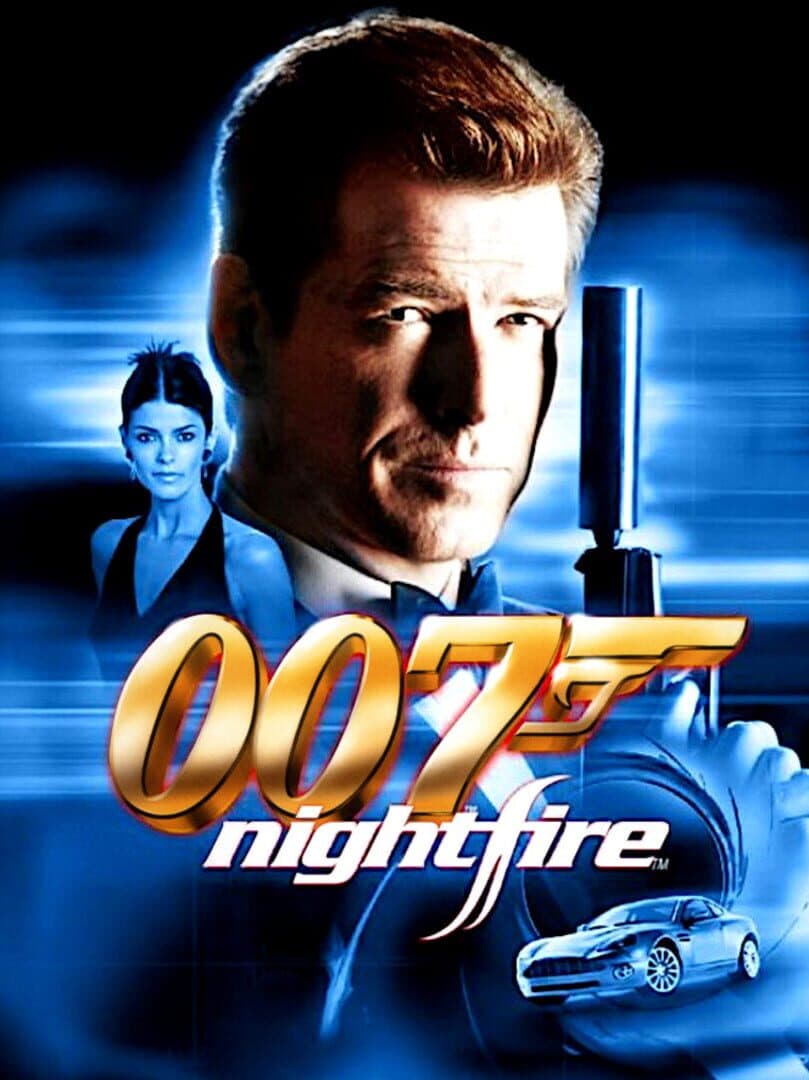
James Bond 007: Nightfire
Can your GPU run this game?
Estimated FPS across quality settings and resolutions
Search for your GPU above to see a full FPS breakdown at every quality and resolution.
James Bond 007: Nightfire FPS by GPU
Estimated framerates for 14 reference GPUs · pick a resolution and quality
Full benchmark grid · 14 GPUs × 4 qualities × 3 resolutions
1080p performance
| GPU | low | medium | high | ultra |
|---|---|---|---|---|
| RTX 5090 | 999 fps | 999 fps | 999 fps | 999 fps |
| RTX 4090 | 999 fps | 999 fps | 999 fps | 999 fps |
| RX 7900 XTX | 999 fps | 999 fps | 999 fps | 999 fps |
| RTX 5080 | 999 fps | 999 fps | 999 fps | 999 fps |
| RTX 4080 Super | 999 fps | 999 fps | 999 fps | 999 fps |
| RTX 4070 Ti | 999 fps | 999 fps | 999 fps | 937 fps |
| RTX 4070 | 999 fps | 999 fps | 988 fps | 803 fps |
| RX 7800 XT | 999 fps | 999 fps | 871 fps | 707 fps |
| RTX 3080 | 999 fps | 999 fps | 847 fps | 688 fps |
| RTX 4060 Ti | 999 fps | 999 fps | 800 fps | 650 fps |
| RTX 3070 | 999 fps | 912 fps | 729 fps | 593 fps |
| RTX 4060 | 999 fps | 824 fps | 659 fps | 535 fps |
| RTX 3060 | 882 fps | 706 fps | 565 fps | 459 fps |
| GTX 1660 Super | 640 fps | 512 fps | 409 fps | 333 fps |
1440p performance
| GPU | low | medium | high | ultra |
|---|---|---|---|---|
| RTX 5090 | 999 fps | 999 fps | 999 fps | 999 fps |
| RTX 4090 | 999 fps | 999 fps | 999 fps | 999 fps |
| RX 7900 XTX | 999 fps | 999 fps | 999 fps | 999 fps |
| RTX 5080 | 999 fps | 999 fps | 999 fps | 946 fps |
| RTX 4080 Super | 999 fps | 999 fps | 999 fps | 889 fps |
| RTX 4070 Ti | 999 fps | 999 fps | 865 fps | 703 fps |
| RTX 4070 | 999 fps | 926 fps | 741 fps | 602 fps |
| RX 7800 XT | 999 fps | 816 fps | 653 fps | 531 fps |
| RTX 3080 | 993 fps | 794 fps | 635 fps | 516 fps |
| RTX 4060 Ti | 938 fps | 750 fps | 600 fps | 488 fps |
| RTX 3070 | 855 fps | 684 fps | 547 fps | 444 fps |
| RTX 4060 | 772 fps | 618 fps | 494 fps | 401 fps |
| RTX 3060 | 662 fps | 529 fps | 424 fps | 344 fps |
| GTX 1660 Super | 480 fps | 384 fps | 307 fps | 249 fps |
4K performance
| GPU | low | medium | high | ultra |
|---|---|---|---|---|
| RTX 5090 | 999 fps | 988 fps | 791 fps | 642 fps |
| RTX 4090 | 999 fps | 918 fps | 734 fps | 596 fps |
| RX 7900 XTX | 999 fps | 824 fps | 659 fps | 535 fps |
| RTX 5080 | 971 fps | 776 fps | 621 fps | 505 fps |
| RTX 4080 Super | 912 fps | 729 fps | 584 fps | 474 fps |
| RTX 4070 Ti | 721 fps | 576 fps | 461 fps | 375 fps |
| RTX 4070 | 618 fps | 494 fps | 395 fps | 321 fps |
| RX 7800 XT | 544 fps | 435 fps | 348 fps | 283 fps |
| RTX 3080 | 529 fps | 424 fps | 339 fps | 275 fps |
| RTX 4060 Ti | 500 fps | 400 fps | 320 fps | 260 fps |
| RTX 3070 | 456 fps | 365 fps | 292 fps | 237 fps |
| RTX 4060 | 412 fps | 329 fps | 264 fps | 214 fps |
| RTX 3060 | 353 fps | 282 fps | 226 fps | 184 fps |
| GTX 1660 Super | 256 fps | 205 fps | 164 fps | 133 fps |
Where to buy
James Bond 007: Nightfire
affiliate
Minimum Hardware
* Amazon links are affiliate links. We may earn a commission at no extra cost to you.
About
James Bond 007: Nightfire, released in 2002, is a first-person shooter that captures the essence of the British secret agent experience. As a sequel to Agent Under Fire, this game features a mix of espionage, combat, and stealth elements, making it a notable addition to the Bond franchise. Although Pierce Brosnan’s likeness is prominent, players will notice that his voice is replaced by actor Maxwell Caulfield, adding a unique twist to the character's portrayal.
In terms of PC performance, Nightfire is quite accessible, making it an excellent choice for gamers with entry-level setups. The minimum GPU requirement is around 300 points, allowing many modern graphics cards to handle the game effortlessly. With a solid FPS benchmark, users can expect smooth performance even at higher graphics settings, ensuring that both casual and dedicated gamers can enjoy the experience without needing high-end hardware.
If you’re a fan of first-person shooters with a blend of action and strategy, you should certainly consider playing James Bond 007: Nightfire. With a respectable rating of 75/100, it offers a solid gaming experience that balances nostalgia with engaging gameplay, making it a worthwhile addition to your collection.
Performance profile
Released in November 2002, James Bond 007: Nightfire comes from the DirectX 9 era. Even the cheapest modern discrete GPU crushes it at maxed-out settings; the only real bottleneck today is CPU single-thread speed on older titles that were never multi-threaded.
Extremely light — James Bond 007: Nightfire runs at 60 FPS 1080p on any integrated GPU (Intel Iris Xe, AMD Radeon Graphics) or a decade-old discrete card like the GTX 1050. A current-gen RTX 4060 pushes 4K Ultra without effort.
Storyline
The game's prologue mission starts in Paris, France, with James Bond helping French Intelligence operative Dominique Paradis evade a gang chase while chasing a truck with a stolen nuclear weapon, before continuing in his car. After stopping the truck from blowing up the Eiffel Tower, Dominique and James celebrate New Year's Eve. The British Government sends Bond undercover to a party in industrialist Raphael Drake's Austrian castle. M believes that the party is a cover for the exchange of a missile guidance chip between Raphael Drake and Alexander Mayhew, who manages the Japanese branch of Drake's industry, Phoenix International, and had stolen the chip from the United States. Phoenix is believed to be a front for weapon smuggling. M gives Bond the instruction for 007 to rendezvous with CIA agent Zoe Nightshade and Dominique, who is posing as Drake's mistress. While Zoe distracts the guards, Bond makes his way to the exchange and steals the chip. Agents Nightshade and 007 make an try to make an escape on a cable car, when Drake's bodyguard, Rook, attacks the cable car with a rocket-launching helicopter. Bond shoots down the attacking helicopter using rockets found in the cable car. James and Zoe then escape Drake's forces in an armored snowmobile before continuing in James' car. They rendezvous with Q, who takes them out of Austria. After the breach, Drake threatens to kill Mayhew, should the operation fail. Mayhew contacts MI6, saying he will provide vital information if Bond comes to his rescue. At his Japanese estate, Mayhew is attacked by Drake's men, consisting of Japanese thugs. Bond fights his way through the estate and manages to obtain a file from Mayhew's safe. As they are prepared to make an escape from the estate, Mayhew is killed by a ninja. The file leads Bond to Mayhew's office at the Phoenix Building in Tokyo. Bond is able to infiltrate the building while the guards are changing shifts and secures official NightFire documents. He is then attacked by Drake's men before Dominique provides a distraction, which allows Bond to escape via parachute off the roof of the building. The NightFire documents lead Bond to a nuclear power plant being decommissioned by Phoenix International. Bond retrieves evidence of Drake's activities and escapes. However, he is then double crossed and captured by Kiko, Mayhew's former bodyguard, and turned over to Drake. On the top of the Phoenix building, Drake plans to kill Bond and Dominique, who has been discovered as a mole. Dominique is kicked off the rooftop and killed by Kiko. Bond escapes to the ground level before being saved by Australian Intelligence agent Alura McCall. M sends Bond and Alura to Drake's private island, where Drake has set up a jamming signal. The pair infiltrate the island and eliminate Drake's defenses. M makes Bond aware of the UN, EU, and NATO forces arriving on the island to dismantle remaining enemy combatants. Bond makes his way to Drake's underground silo, fighting off Kiko before entering one of three space shuttles intending to capture the Space Defense Platform. Kiko incinerates in the blast pit when Bond's space shuttle launches. Bond reaches the U.S. Space Defense Platform, where Drake is. He successfully sends all eight missiles off course, saving millions of lives, and causes Drake's laser weapon to malfunction, leading to a huge explosion. Finally, Bond kills Drake. As the station goes up in flames, Bond blasts from an escape pod and goes back down to Earth, where M informs him that astronomers from around the globe are reporting "unexpected meteor showers" (which is actually the debris of the now-destroyed Space Defense Platform).