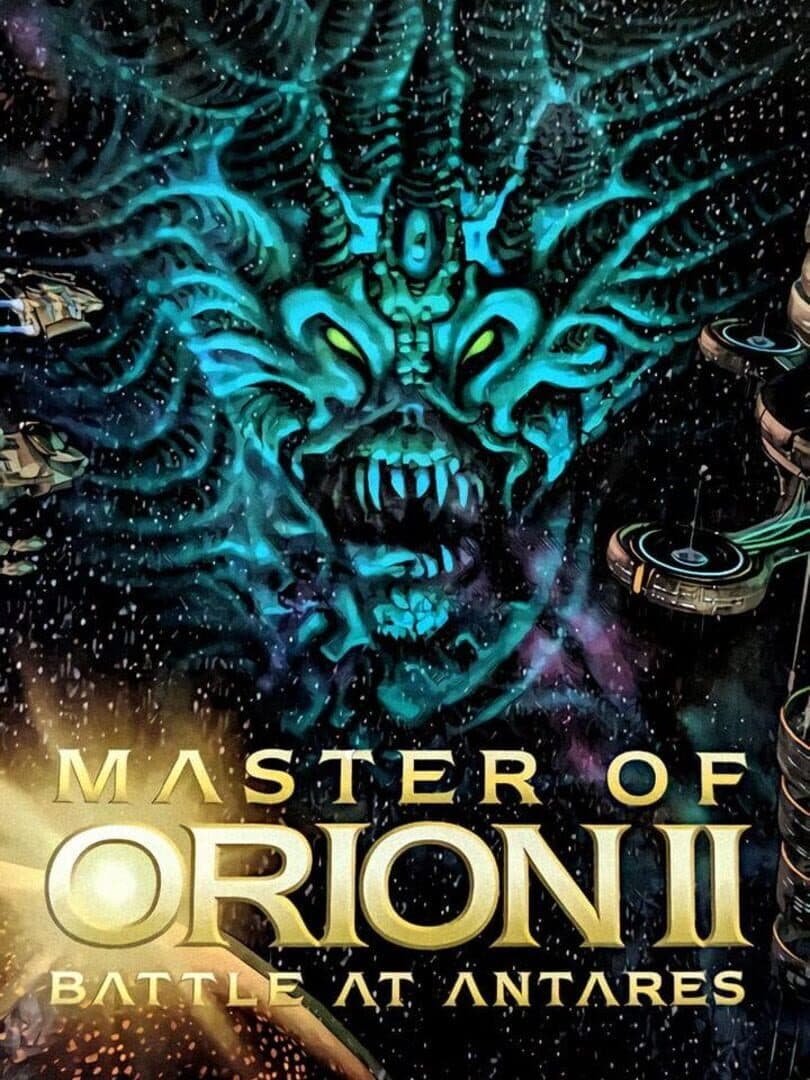
Master of Orion II: Battle at Antares
Can your GPU run this game?
Estimated FPS across quality settings and resolutions
Search for your GPU above to see a full FPS breakdown at every quality and resolution.
Master of Orion II: Battle at Antares FPS by GPU
Estimated framerates for 14 reference GPUs · pick a resolution and quality
Full benchmark grid · 14 GPUs × 4 qualities × 3 resolutions
1080p performance
| GPU | low | medium | high | ultra |
|---|---|---|---|---|
| RTX 5090 | 999 fps | 999 fps | 999 fps | 999 fps |
| RTX 4090 | 999 fps | 999 fps | 999 fps | 999 fps |
| RX 7900 XTX | 999 fps | 999 fps | 999 fps | 999 fps |
| RTX 5080 | 999 fps | 999 fps | 999 fps | 999 fps |
| RTX 4080 Super | 999 fps | 999 fps | 999 fps | 999 fps |
| RTX 4070 Ti | 999 fps | 999 fps | 999 fps | 937 fps |
| RTX 4070 | 999 fps | 999 fps | 988 fps | 803 fps |
| RX 7800 XT | 999 fps | 999 fps | 871 fps | 707 fps |
| RTX 3080 | 999 fps | 999 fps | 847 fps | 688 fps |
| RTX 4060 Ti | 999 fps | 999 fps | 800 fps | 650 fps |
| RTX 3070 | 999 fps | 912 fps | 729 fps | 593 fps |
| RTX 4060 | 999 fps | 824 fps | 659 fps | 535 fps |
| RTX 3060 | 882 fps | 706 fps | 565 fps | 459 fps |
| GTX 1660 Super | 640 fps | 512 fps | 409 fps | 333 fps |
1440p performance
| GPU | low | medium | high | ultra |
|---|---|---|---|---|
| RTX 5090 | 999 fps | 999 fps | 999 fps | 999 fps |
| RTX 4090 | 999 fps | 999 fps | 999 fps | 999 fps |
| RX 7900 XTX | 999 fps | 999 fps | 999 fps | 999 fps |
| RTX 5080 | 999 fps | 999 fps | 999 fps | 946 fps |
| RTX 4080 Super | 999 fps | 999 fps | 999 fps | 889 fps |
| RTX 4070 Ti | 999 fps | 999 fps | 865 fps | 703 fps |
| RTX 4070 | 999 fps | 926 fps | 741 fps | 602 fps |
| RX 7800 XT | 999 fps | 816 fps | 653 fps | 531 fps |
| RTX 3080 | 993 fps | 794 fps | 635 fps | 516 fps |
| RTX 4060 Ti | 938 fps | 750 fps | 600 fps | 488 fps |
| RTX 3070 | 855 fps | 684 fps | 547 fps | 444 fps |
| RTX 4060 | 772 fps | 618 fps | 494 fps | 401 fps |
| RTX 3060 | 662 fps | 529 fps | 424 fps | 344 fps |
| GTX 1660 Super | 480 fps | 384 fps | 307 fps | 249 fps |
4K performance
| GPU | low | medium | high | ultra |
|---|---|---|---|---|
| RTX 5090 | 999 fps | 988 fps | 791 fps | 642 fps |
| RTX 4090 | 999 fps | 918 fps | 734 fps | 596 fps |
| RX 7900 XTX | 999 fps | 824 fps | 659 fps | 535 fps |
| RTX 5080 | 971 fps | 776 fps | 621 fps | 505 fps |
| RTX 4080 Super | 912 fps | 729 fps | 584 fps | 474 fps |
| RTX 4070 Ti | 721 fps | 576 fps | 461 fps | 375 fps |
| RTX 4070 | 618 fps | 494 fps | 395 fps | 321 fps |
| RX 7800 XT | 544 fps | 435 fps | 348 fps | 283 fps |
| RTX 3080 | 529 fps | 424 fps | 339 fps | 275 fps |
| RTX 4060 Ti | 500 fps | 400 fps | 320 fps | 260 fps |
| RTX 3070 | 456 fps | 365 fps | 292 fps | 237 fps |
| RTX 4060 | 412 fps | 329 fps | 264 fps | 214 fps |
| RTX 3060 | 353 fps | 282 fps | 226 fps | 184 fps |
| GTX 1660 Super | 256 fps | 205 fps | 164 fps | 133 fps |
Where to buy
Master of Orion II: Battle at Antares
affiliate
Minimum Hardware
* Amazon links are affiliate links. We may earn a commission at no extra cost to you.
About
Master of Orion II: Battle at Antares (1996) is widely regarded as the definitive 4X space strategy game, combining deep turn-based gameplay with empire building, diplomacy, and tactical combat. The game's complexity and strategic depth have earned it a cult status that persists nearly three decades later, with few modern competitors matching its engaging mechanics and replayability.
Performance-wise, Master of Orion II is extremely accessible by modern standards, requiring minimal GPU resources and running smoothly on virtually any contemporary graphics card. Even budget integrated graphics will easily deliver high FPS on maximum settings, making it an ideal benchmark title for testing baseline system performance. You won't need to adjust graphics settings or worry about frame rate stability—this is one of the most lightweight gaming experiences available.
With a solid 92/100 rating and unmatched gameplay depth for its genre, Master of Orion II remains essential playing for strategy enthusiasts and anyone interested in gaming history. If you appreciate turn-based strategy and don't mind the retro presentation, this classic absolutely deserves a place in your library.
Performance profile
Released in November 1996, Master of Orion II: Battle at Antares predates modern GPU acceleration as we know it today. It runs effortlessly on virtually any current hardware, including integrated graphics and entry-level laptops — framerate is limited by the engine, not the GPU.
Extremely light — Master of Orion II: Battle at Antares runs at 60 FPS 1080p on any integrated GPU (Intel Iris Xe, AMD Radeon Graphics) or a decade-old discrete card like the GTX 1050. A current-gen RTX 4060 pushes 4K Ultra without effort.
Storyline
Long before the time in which the game is set, two extremely powerful races, the Orions and the Antarans, fought a war that devastated most of the galaxy. The victorious Orions, rather than exterminate the Antarans, imprisoned them in a pocket dimension before departing the galaxy, leaving behind a very powerful robotic warship, the Guardian, to protect their homeworld. Some time after the game starts, the Antarans, having broken out of their prison dimension, begin to send increasingly powerful fleets against the players' colonies, to destroy them rather than to invade. The only way they can be stopped is to carry the battle to their home universe through a Dimensional Portal.