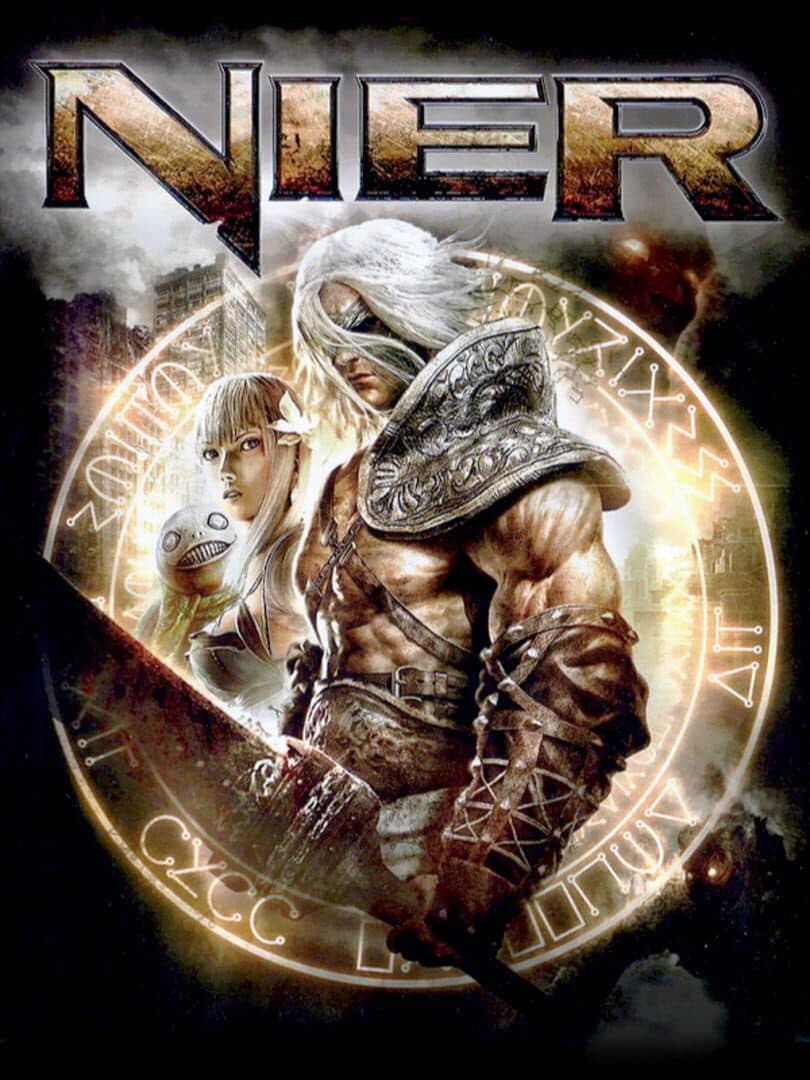
NieR
Can your GPU run this game?
Estimated FPS across quality settings and resolutions
Search for your GPU above to see a full FPS breakdown at every quality and resolution.
NieR FPS by GPU
Estimated framerates for 14 reference GPUs · pick a resolution and quality
Full benchmark grid · 14 GPUs × 4 qualities × 3 resolutions
1080p performance
| GPU | low | medium | high | ultra |
|---|---|---|---|---|
| RTX 5090 | 513 fps | 411 fps | 328 fps | 267 fps |
| RTX 4090 | 477 fps | 381 fps | 305 fps | 248 fps |
| RX 7900 XTX | 428 fps | 342 fps | 274 fps | 222 fps |
| RTX 5080 | 403 fps | 323 fps | 258 fps | 210 fps |
| RTX 4080 Super | 379 fps | 303 fps | 242 fps | 197 fps |
| RTX 4070 Ti | 299 fps | 239 fps | 192 fps | 156 fps |
| RTX 4070 | 257 fps | 205 fps | 164 fps | 133 fps |
| RX 7800 XT | 226 fps | 181 fps | 145 fps | 118 fps |
| RTX 3080 | 220 fps | 176 fps | 141 fps | 114 fps |
| RTX 4060 Ti | 208 fps | 166 fps | 133 fps | 108 fps |
| RTX 3070 | 189 fps | 152 fps | 121 fps | 98 fps |
| RTX 4060 | 171 fps | 137 fps | 109 fps | 89 fps |
| RTX 3060 | 147 fps | 117 fps | 94 fps | 76 fps |
| GTX 1660 Super | 106 fps | 85 fps | 68 fps | 55 fps |
1440p performance
| GPU | low | medium | high | ultra |
|---|---|---|---|---|
| RTX 5090 | 385 fps | 308 fps | 246 fps | 200 fps |
| RTX 4090 | 357 fps | 286 fps | 229 fps | 186 fps |
| RX 7900 XTX | 321 fps | 257 fps | 205 fps | 167 fps |
| RTX 5080 | 302 fps | 242 fps | 194 fps | 157 fps |
| RTX 4080 Super | 284 fps | 227 fps | 182 fps | 148 fps |
| RTX 4070 Ti | 225 fps | 180 fps | 144 fps | 117 fps |
| RTX 4070 | 192 fps | 154 fps | 123 fps | 100 fps |
| RX 7800 XT | 170 fps | 136 fps | 109 fps | 88 fps |
| RTX 3080 | 165 fps | 132 fps | 106 fps | 86 fps |
| RTX 4060 Ti | 156 fps | 125 fps | 100 fps | 81 fps |
| RTX 3070 | 142 fps | 114 fps | 91 fps | 74 fps |
| RTX 4060 | 128 fps | 103 fps | 82 fps | 67 fps |
| RTX 3060 | 110 fps | 88 fps | 70 fps | 57 fps |
| GTX 1660 Super | 80 fps | 64 fps | 51 fps | 41 fps |
4K performance
| GPU | low | medium | high | ultra |
|---|---|---|---|---|
| RTX 5090 | 205 fps | 164 fps | 131 fps | 107 fps |
| RTX 4090 | 191 fps | 152 fps | 122 fps | 99 fps |
| RX 7900 XTX | 171 fps | 137 fps | 109 fps | 89 fps |
| RTX 5080 | 161 fps | 129 fps | 103 fps | 84 fps |
| RTX 4080 Super | 152 fps | 121 fps | 97 fps | 79 fps |
| RTX 4070 Ti | 120 fps | 96 fps | 77 fps | 62 fps |
| RTX 4070 | 103 fps | 82 fps | 66 fps | 53 fps |
| RX 7800 XT | 90 fps | 72 fps | 58 fps | 47 fps |
| RTX 3080 | 88 fps | 70 fps | 56 fps | 46 fps |
| RTX 4060 Ti | 83 fps | 66 fps | 53 fps | 43 fps |
| RTX 3070 | 76 fps | 61 fps | 48 fps | 39 fps |
| RTX 4060 | 68 fps | 55 fps | 44 fps | 36 fps |
| RTX 3060 | 59 fps | 47 fps | 38 fps | 30 fps |
| GTX 1660 Super | 43 fps | 34 fps | 27 fps | 22 fps |
Minimum Hardware
* Amazon links are affiliate links. We may earn a commission at no extra cost to you.
About
NieR, released in 2010, is an action-adventure game by Square Enix that immerses players in a hauntingly beautiful world plagued by disease and monstrous creatures. Players take on the role of NIER, a determined father on a quest to save his daughter from a deadly virus. The game's blend of compelling storytelling, dynamic combat, and unique gameplay mechanics makes it a notable title in the RPG genre.
In terms of PC performance, NieR is relatively accessible compared to many contemporary games. To achieve smooth gameplay with decent FPS, a minimum entry-level GPU with a score of around 6138 is required, along with a CPU score of at least 4253. Players should aim for 8 GB of RAM to ensure optimal performance, allowing them to adjust graphics settings to find the perfect balance between visuals and frame rates.
Given its respectable rating of 81/100, NieR is highly recommended for fans of action RPGs and those who appreciate deep narratives. The game's distinct art style and engaging combat mechanics make it a worthwhile addition to any gamer's library.
Performance profile
April 2010 release. NieR targets mid-2000s-to-early-2010s hardware — any modern entry-level GPU (GTX 1650 tier or newer integrated graphics) handles it at 1080p Ultra without breaking a sweat.
Mid-range territory. An RTX 3060 or RX 6700 XT delivers 60 FPS at 1080p High in NieR. For 1440p Ultra you'll want an RTX 4060 Ti / RX 7700 XT; 4K Ultra needs an RTX 4070 Ti or faster.
Storyline
The game opens with a prologue during the summer of 2049 in a snowstorm. In a modern, broken-down grocery store, Nier (Jamieson Price) fends off attacks from ethereal monsters to protect his sick young daughter, Yonah (Heather Hogan). After defeating the monsters, he checks on Yonah, who has begun to cough badly. The game then cuts to 1,312 years later, where the player sees what appears to be the same two characters, now living in a village built upon the ruins of an old town. The low-technology village is one of several, and is surrounded by more modern ruins such as the remnants of train tracks and industrial machinery. The areas between towns are filled with monsters known as Shades that attack travelers. As Yonah's illness, the Black Scrawl, is terminal, Nier sets out to look for a cure. As he does, Nier finds a talking book, Grimoire Weiss (Liam O'Brien), which suggests that the two team up to use Weiss' magic and to find a cure for Yonah's disease. In their search, they encounter Kainé (Laura Bailey), a hot-tempered and foul-mouthed swordswoman; and Emil (Julie Ann Taylor), a blindfolded boy whose eyes petrify anyone they see. After journeying for a time, the village is attacked by a giant shade; the battle culminates in Yonah being carried away by a master Shade that suddenly appears—the Shadowlord—who carries his own book, Grimoire Noir. The game then jumps five years forward. Nier and the others are trying to find the parts to a key that they believe will help them locate the Shadowlord and Grimoire Noir. After defeating five Shades and assembling the key, the team go to defeat the Shadowlord. There, Devola and Popola (both voiced by Eden Riegel), characters who have been guiding Nier on his quest, appear to try to stop them. They explain that over 1300 years prior, humanity faced extinction due to an incurable disease. In an attempt to survive, they separated their souls from their bodies using Grimoire Noir and Weiss. They created clones resistant to the disease, Replicants, and intended to recombine the souls, or Gestalts, with the Replicant bodies once it had died out; Devola and Popola were androids set to oversee the project. Over time, the Replicants had begun to form their own identities; while the Gestalts, or Shades, had grown aggressive to them.[7] Nier defeats the pair, with Emil sacrificing himself to ensure his friends' progress. The remaining group then defeats the Shadowlord, and the player discovers that he is the Gestalt form of the Nier from the prologue. Driven to protect his Yonah, he was the first Gestalt and has combined her with the Replicant Yonah. The original Yonah, however, tells the Gestalt Nier that she can hear the new Yonah inside her, and that she loves the Replicant Nier and deserves the body just as much.[8] She vacates the body, and Nier and Yonah are reunited. If the player plays the game again, they start just after the five-year skip. They learn about Kainé's past, including that she is intersex, which along with the death of her parents resulted in her ostracism as a child, and that she is partially possessed by a Shade. The player gains the ability to understand what the shades are saying, including the one possessing Kainé, though in-game Nier, Weiss, and Emil are still unable to. Additional cutscenes are also shown, giving the motivations and backstory behind the Shade bosses that are fought and showing them as sentient people trying to defend their friends against Nier. The ending to the second playthrough shows that Emil survives his sacrifice, and that Gestalt Nier and Yonah are reunited in the afterlife. A third playthrough presents the player with a choice in the ending to save Kainé, who is seen to be dying in agony; Nier can either kill her to end her suffering, or sacrifice his life for her. The latter choice not only erases all memory of him from the other characters' minds, shown in a final cutscene, but also deletes all of the player's saved progress, as if the game had never been played. Moreover, if the player wants to start a new game, they will be unable to enter the same name chosen for the previous playthrough for the Nier character.