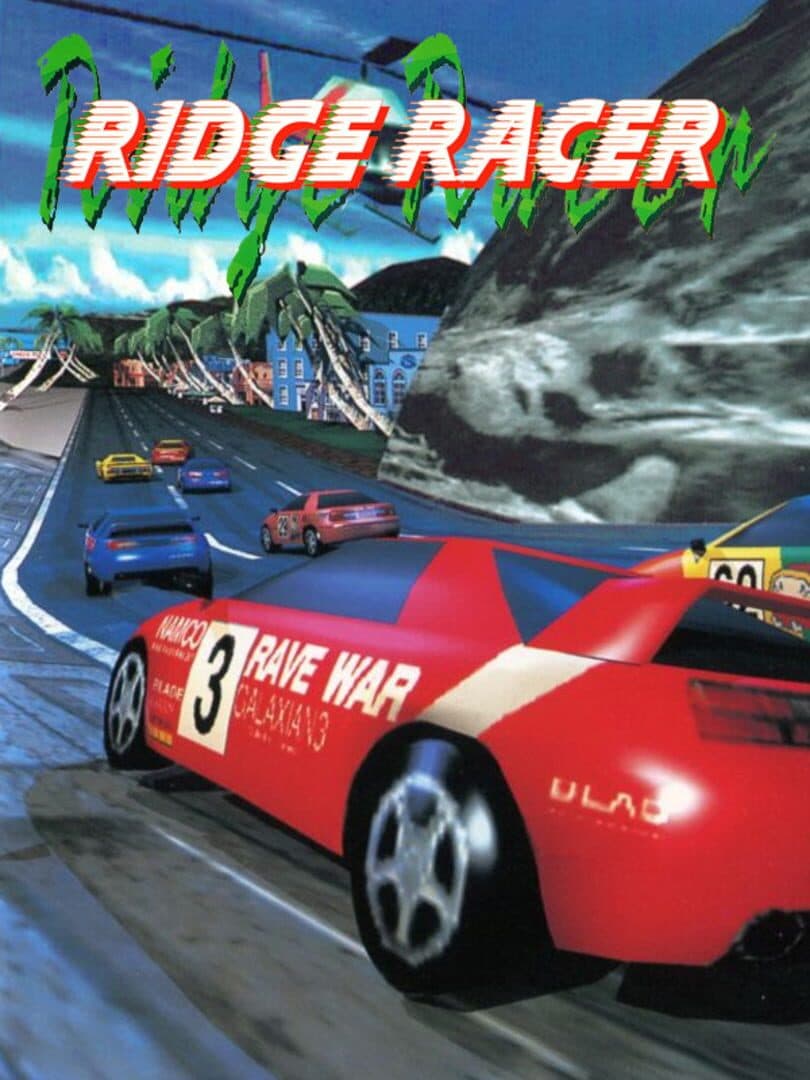
Ridge Racer
Can your GPU run this game?
Estimated FPS across quality settings and resolutions
Search for your GPU above to see a full FPS breakdown at every quality and resolution.
Ridge Racer FPS by GPU
Estimated framerates for 14 reference GPUs · pick a resolution and quality
Full benchmark grid · 14 GPUs × 4 qualities × 3 resolutions
1080p performance
| GPU | low | medium | high | ultra |
|---|---|---|---|---|
| RTX 5090 | 999 fps | 999 fps | 999 fps | 999 fps |
| RTX 4090 | 999 fps | 999 fps | 999 fps | 999 fps |
| RX 7900 XTX | 999 fps | 999 fps | 999 fps | 999 fps |
| RTX 5080 | 999 fps | 999 fps | 999 fps | 999 fps |
| RTX 4080 Super | 999 fps | 999 fps | 999 fps | 945 fps |
| RTX 4070 Ti | 999 fps | 999 fps | 919 fps | 747 fps |
| RTX 4070 | 999 fps | 985 fps | 788 fps | 640 fps |
| RX 7800 XT | 999 fps | 868 fps | 694 fps | 564 fps |
| RTX 3080 | 999 fps | 844 fps | 676 fps | 549 fps |
| RTX 4060 Ti | 997 fps | 797 fps | 638 fps | 518 fps |
| RTX 3070 | 909 fps | 727 fps | 582 fps | 473 fps |
| RTX 4060 | 821 fps | 657 fps | 525 fps | 427 fps |
| RTX 3060 | 704 fps | 563 fps | 450 fps | 366 fps |
| GTX 1660 Super | 510 fps | 408 fps | 327 fps | 265 fps |
1440p performance
| GPU | low | medium | high | ultra |
|---|---|---|---|---|
| RTX 5090 | 999 fps | 999 fps | 999 fps | 961 fps |
| RTX 4090 | 999 fps | 999 fps | 999 fps | 892 fps |
| RX 7900 XTX | 999 fps | 999 fps | 985 fps | 800 fps |
| RTX 5080 | 999 fps | 999 fps | 929 fps | 755 fps |
| RTX 4080 Super | 999 fps | 999 fps | 873 fps | 709 fps |
| RTX 4070 Ti | 999 fps | 862 fps | 690 fps | 560 fps |
| RTX 4070 | 924 fps | 739 fps | 591 fps | 480 fps |
| RX 7800 XT | 814 fps | 651 fps | 521 fps | 423 fps |
| RTX 3080 | 792 fps | 633 fps | 507 fps | 412 fps |
| RTX 4060 Ti | 748 fps | 598 fps | 478 fps | 389 fps |
| RTX 3070 | 682 fps | 545 fps | 436 fps | 354 fps |
| RTX 4060 | 616 fps | 493 fps | 394 fps | 320 fps |
| RTX 3060 | 528 fps | 422 fps | 338 fps | 274 fps |
| GTX 1660 Super | 383 fps | 306 fps | 245 fps | 199 fps |
4K performance
| GPU | low | medium | high | ultra |
|---|---|---|---|---|
| RTX 5090 | 985 fps | 788 fps | 630 fps | 512 fps |
| RTX 4090 | 915 fps | 732 fps | 585 fps | 476 fps |
| RX 7900 XTX | 821 fps | 657 fps | 525 fps | 427 fps |
| RTX 5080 | 774 fps | 619 fps | 495 fps | 403 fps |
| RTX 4080 Super | 727 fps | 582 fps | 465 fps | 378 fps |
| RTX 4070 Ti | 575 fps | 460 fps | 368 fps | 299 fps |
| RTX 4070 | 493 fps | 394 fps | 315 fps | 256 fps |
| RX 7800 XT | 434 fps | 347 fps | 278 fps | 226 fps |
| RTX 3080 | 422 fps | 338 fps | 270 fps | 220 fps |
| RTX 4060 Ti | 399 fps | 319 fps | 255 fps | 207 fps |
| RTX 3070 | 364 fps | 291 fps | 233 fps | 189 fps |
| RTX 4060 | 328 fps | 263 fps | 210 fps | 171 fps |
| RTX 3060 | 281 fps | 225 fps | 180 fps | 146 fps |
| GTX 1660 Super | 204 fps | 163 fps | 131 fps | 106 fps |
Where to buy
Ridge Racer
affiliate
Minimum Hardware
* Amazon links are affiliate links. We may earn a commission at no extra cost to you.
About
Ridge Racer, released in 1993, is a seminal arcade racing game that introduced players to high-speed competition through its innovative use of polygon graphics. Originally debuting on the Namco System 22 arcade system, it quickly transitioned to the PlayStation, setting the stage for a long-running series. The primary objective is to race against opponents and finish in first place, with an engaging blend of drift mechanics and unique track designs that have made it a notable title in the racing genre.
In terms of PC performance, Ridge Racer is quite accessible, with minimum hardware requirements that cater to entry-level setups. Players can expect solid FPS on a system equipped with a GPU scoring around 947 or higher, alongside a CPU with a score of approximately 855 and at least 2 GB of RAM. This makes it an ideal choice for gamers looking for a low-demand experience while still enjoying impressive graphics for its time.
Given its 74/100 rating and enduring popularity, Ridge Racer is a worthy pick for both retro enthusiasts and newcomers to the racing genre. If you're a fan of exhilarating races and want to explore the origins of polygon graphics in gaming, this classic is definitely worth your time.
Performance profile
Released in October 1993, Ridge Racer predates modern GPU acceleration as we know it today. It runs effortlessly on virtually any current hardware, including integrated graphics and entry-level laptops — framerate is limited by the engine, not the GPU.
Extremely light — Ridge Racer runs at 60 FPS 1080p on any integrated GPU (Intel Iris Xe, AMD Radeon Graphics) or a decade-old discrete card like the GTX 1050. A current-gen RTX 4060 pushes 4K Ultra without effort.
Storyline
In the PlayStation version, the player can play a mini-game of Galaxian as the game loads. If the player wins before the game loads, eight additional cars become available to drive in the game. The twelve cars are varied in their specifications, with some featuring a high top speed, others excelling at acceleration or turning, and others being more balanced. Certain cars are named after other Namco games, such as Solvalou, Mappy, Bosconian, Nebulasray, and Xevious. Once the game has loaded, all that is needed afterwards is to play six instrumental music tracks. The player can replace the disc at any time during gameplay, although the game does not update to reflect the switch; regardless of what disc is inserted, there will always be six tracks to choose from, corresponding to the starting points of the six tracks on the game disc. After launching the game, the player can choose a course, transmission (automatic or six-speed manual), car and song. During the race, the player can observe the racetrack from the first-person perspective (or from the third-person perspective for the PlayStation version). Namco's NeGcon controller can be used to play the game. Being an arcade racer, collisions do no damage to the car and merely slow the player down. There is also a time limit, which ends the game if it counts down to zero. Checkpoints are present throughout the track that give the player additional time when passed through. The game features only a single race track, although it consists of four race configurations of varying difficulty: Novice, Intermediate, Advanced and Time Trial (in the latter two, the track is extended). The player races against eleven other cars, except in Time Trial, where there is only one opponent. The higher the difficulty level, the faster the cars run, with Time Trial mode featuring the fastest cars. Each race consists of three laps (two on the beginner course). In the PlayStation version, after the player wins every race, "extra" races become available, which are raced on a reversed version of the course, and the player encounters an additional opponent in Time Trial mode: the 13th Racing "Devil" car, the fastest car in the game. Upon winning this race, the car is unlocked for the player to drive. In the arcade version, after finishing the game, the winning player's score is saved in action-replay highlights. The PlayStation version also features a hidden "mirror" version of the tracks. The track becomes a "mirror image" of itself; left turns become right turns and vice-versa, and the surroundings switch sides of the road.