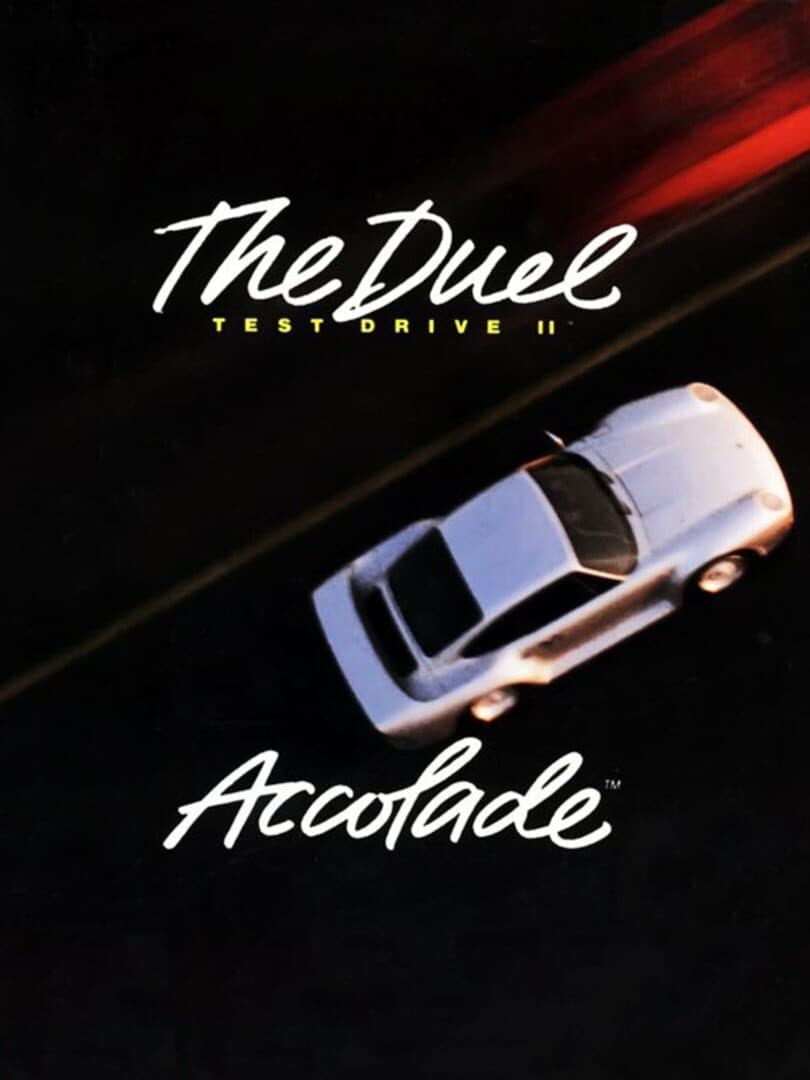

The Duel: Test Drive II
Can your GPU run this game?
Estimated FPS across quality settings and resolutions
Search for your GPU above to see a full FPS breakdown at every quality and resolution.
The Duel: Test Drive II FPS by GPU
Estimated framerates for 14 reference GPUs · pick a resolution and quality
Full benchmark grid · 14 GPUs × 4 qualities × 3 resolutions
1080p performance
| GPU | low | medium | high | ultra |
|---|---|---|---|---|
| RTX 5090 | 999 fps | 999 fps | 999 fps | 999 fps |
| RTX 4090 | 999 fps | 999 fps | 999 fps | 999 fps |
| RX 7900 XTX | 999 fps | 999 fps | 999 fps | 910 fps |
| RTX 5080 | 999 fps | 999 fps | 999 fps | 858 fps |
| RTX 4080 Super | 999 fps | 999 fps | 992 fps | 806 fps |
| RTX 4070 Ti | 999 fps | 980 fps | 784 fps | 637 fps |
| RTX 4070 | 999 fps | 840 fps | 672 fps | 546 fps |
| RX 7800 XT | 925 fps | 740 fps | 592 fps | 481 fps |
| RTX 3080 | 900 fps | 720 fps | 576 fps | 468 fps |
| RTX 4060 Ti | 850 fps | 680 fps | 544 fps | 442 fps |
| RTX 3070 | 775 fps | 620 fps | 496 fps | 403 fps |
| RTX 4060 | 700 fps | 560 fps | 448 fps | 364 fps |
| RTX 3060 | 600 fps | 480 fps | 384 fps | 312 fps |
| GTX 1660 Super | 435 fps | 348 fps | 278 fps | 226 fps |
1440p performance
| GPU | low | medium | high | ultra |
|---|---|---|---|---|
| RTX 5090 | 999 fps | 999 fps | 999 fps | 819 fps |
| RTX 4090 | 999 fps | 999 fps | 936 fps | 761 fps |
| RX 7900 XTX | 999 fps | 999 fps | 840 fps | 683 fps |
| RTX 5080 | 999 fps | 990 fps | 792 fps | 644 fps |
| RTX 4080 Super | 999 fps | 930 fps | 744 fps | 605 fps |
| RTX 4070 Ti | 919 fps | 735 fps | 588 fps | 478 fps |
| RTX 4070 | 788 fps | 630 fps | 504 fps | 410 fps |
| RX 7800 XT | 694 fps | 555 fps | 444 fps | 361 fps |
| RTX 3080 | 675 fps | 540 fps | 432 fps | 351 fps |
| RTX 4060 Ti | 638 fps | 510 fps | 408 fps | 332 fps |
| RTX 3070 | 581 fps | 465 fps | 372 fps | 302 fps |
| RTX 4060 | 525 fps | 420 fps | 336 fps | 273 fps |
| RTX 3060 | 450 fps | 360 fps | 288 fps | 234 fps |
| GTX 1660 Super | 326 fps | 261 fps | 209 fps | 170 fps |
4K performance
| GPU | low | medium | high | ultra |
|---|---|---|---|---|
| RTX 5090 | 840 fps | 672 fps | 538 fps | 437 fps |
| RTX 4090 | 780 fps | 624 fps | 499 fps | 406 fps |
| RX 7900 XTX | 700 fps | 560 fps | 448 fps | 364 fps |
| RTX 5080 | 660 fps | 528 fps | 422 fps | 343 fps |
| RTX 4080 Super | 620 fps | 496 fps | 397 fps | 322 fps |
| RTX 4070 Ti | 490 fps | 392 fps | 314 fps | 255 fps |
| RTX 4070 | 420 fps | 336 fps | 269 fps | 218 fps |
| RX 7800 XT | 370 fps | 296 fps | 237 fps | 192 fps |
| RTX 3080 | 360 fps | 288 fps | 230 fps | 187 fps |
| RTX 4060 Ti | 340 fps | 272 fps | 218 fps | 177 fps |
| RTX 3070 | 310 fps | 248 fps | 198 fps | 161 fps |
| RTX 4060 | 280 fps | 224 fps | 179 fps | 146 fps |
| RTX 3060 | 240 fps | 192 fps | 154 fps | 125 fps |
| GTX 1660 Super | 174 fps | 139 fps | 111 fps | 90 fps |

Where to buy
The Duel: Test Drive II
affiliate
Minimum Hardware
* Amazon links are affiliate links. We may earn a commission at no extra cost to you.
About
The Duel: Test Drive II, released in 1989, is a classic cross-platform racing game developed by Distinctive Software and published by Accolade. As the second entry in the Test Drive series, it offers players an exciting blend of racing simulation and arcade-style gameplay, featuring a selection of high-performance sports cars and scenic tracks. Its notable emphasis on realistic driving mechanics for the time set it apart from other titles in the genre, earning it a solid rating of 88/100.
When it comes to PC performance, The Duel: Test Drive II is relatively accessible, with a minimum GPU requirement of an entry-level model scoring around 1500. Players can expect a smooth experience with a variety of graphics settings, and higher-tier GPUs will certainly bring improved FPS and overall visual quality to the game. For optimal performance, mid-range GPUs should comfortably handle the game, allowing players to fully enjoy its classic graphics and detailed environments.
Should you give it a try? If you're a fan of racing games or retro gaming, The Duel: Test Drive II is certainly worth playing, particularly given its strong rating and favorable reception. Its engaging gameplay mechanics and nostalgic charm make it a delightful experience for both new players and those looking to relive a piece of gaming history.
Performance profile
Released in December 1989, The Duel: Test Drive II predates modern GPU acceleration as we know it today. It runs effortlessly on virtually any current hardware, including integrated graphics and entry-level laptops — framerate is limited by the engine, not the GPU.
Extremely light — The Duel: Test Drive II runs at 60 FPS 1080p on any integrated GPU (Intel Iris Xe, AMD Radeon Graphics) or a decade-old discrete card like the GTX 1050. A current-gen RTX 4060 pushes 4K Ultra without effort.
Storyline
Like the original Test Drive, the focus of The Duel is driving exotic cars through dangerous highways, evading traffic, and trying to escape police pursuits. While the first game in the series had the player simply racing for time in a single scenario, Test Drive II improves upon its predecessor by introducing varied scenery, and giving the player the option of racing against the clock or competing against a computer-controlled opponent. The player initially is given the opportunity to choose a car to drive and a level of difficulty, which in turn determines whether the car will use an automatic or manual transmission—the number of difficulty options varies between gaming platforms. Levels begin with the player’s car (and the computer opponent, if selected) idling on a roadway. Primarily these are two to four lane public highways with many turns; each level is different, and they include obstacles such as bridges, cliffs, and tunnels in addition to the other cars already on the road. Each level also has one or more police cars along the course. The goal of each level is to reach the gas station at the end of the course in the least amount of time. Stopping at the gas station is not mandatory, and one could drive past it if inattentive. The consequence of not stopping results in running out of gas, and thus losing a car (life). The player begins the game with 5 lives, one of which is lost each time that the player crashes into something. If the player completes a level without crashing or running out of gas, then he or she is awarded a bonus life. In addition to losing a life, crashing adds thirty seconds to the player's time. Cars could crash into other traffic or off-road obstacles such as trees; they could crash by falling off the cliff on one of the mountain levels, or they could sustain too much damage by staying off the roadway for too long on the flatland levels. Players could also lose a life when using a manual transmission by redlining and consequently blowing the engine. Crashing into a police car instantly ends the game, regardless of the number of lives the player has left. Police cars appear in every level, and if the player is driving faster than the speed limit when encountering one of them, the police car will follow in pursuit. If at any point while being pursued the police car is able to pass the player’s car, the player is forced to pull over and receives a ticket stating the offense and the speed of the vehicle. While this doesn’t cost the player a life, it does take away valuable time. Players can avoid being pursued by police by slowing down before encountering them, anticipating them through the aid of a radar detector, which comes standard in all vehicles in the game.