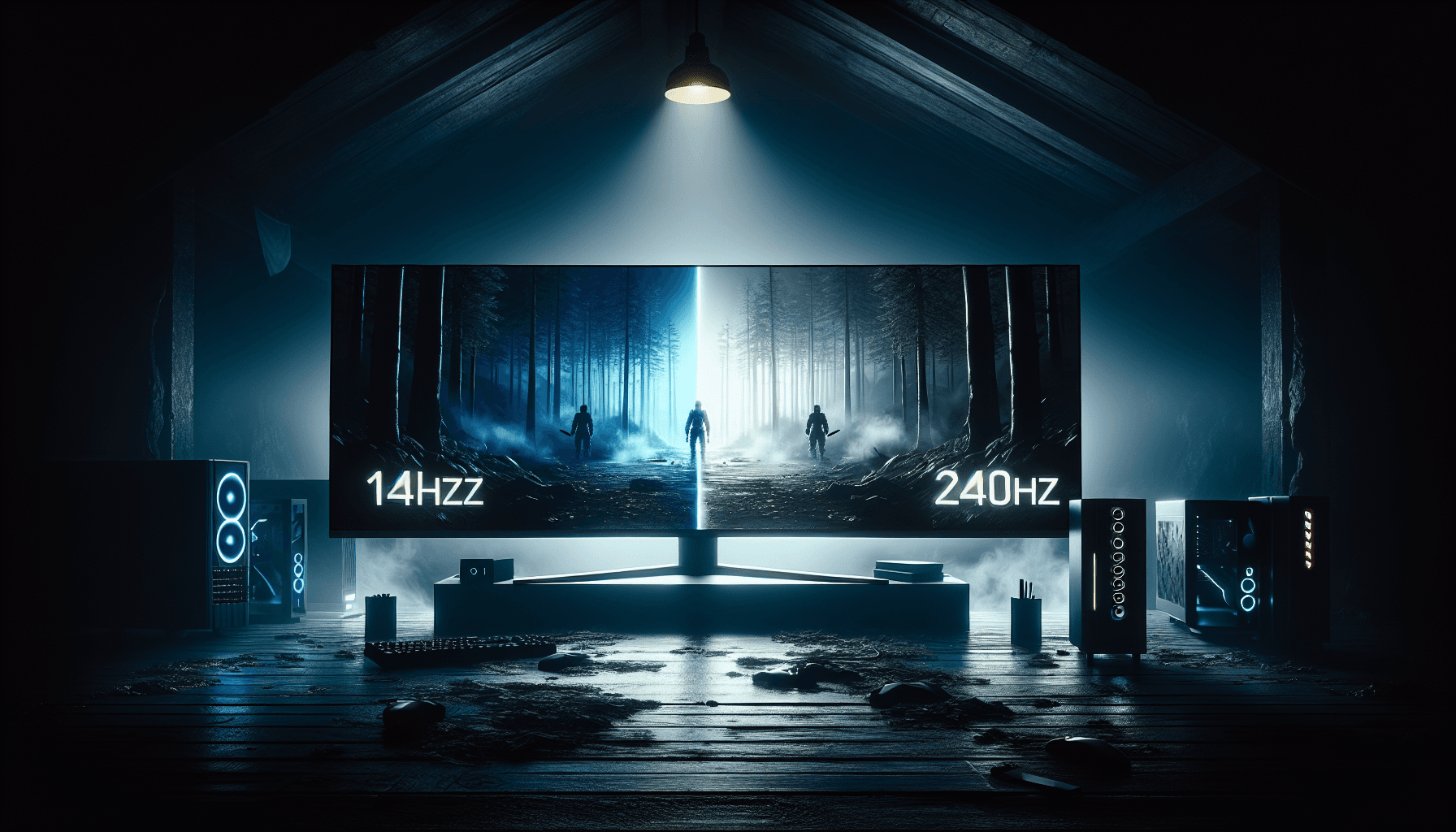








In the escalating arms race of monitor refresh rates, everyone seems to be heralding the all-mighty power of 240Hz as if it's the new holy grail of gaming. But let's not kid ourselves. For most gamers, jumping from a 144Hz to a 240Hz monitor is like trading in a Ferrari for a Bugatti just to cruise through city streets at 30 MPH. Sure, a 240Hz screen makes sense for some specific scenarios, but let's explore when it's really worth it and when it's just overzealous marketing.
The Numbers Game: 144Hz vs 240Hz Gaming
The basic argument pushed by monitor manufacturers is simple: higher refresh rates reduce motion blur. On paper, going from 144Hz to 240Hz means your display redraws the image 96 times more per second. This should, theoretically, provide smoother motion and a more responsive gaming experience. But can the average eye even perceive these extra frames during gameplay? The truth is that while 240Hz does offer an advantage, the perceptual gain isn't as monumental as you'd think. Particularly, if you're playing mainstream titles on mid-tier GPUs like a GTX 1660 Ti or RTX 2060, you're unlikely to consistently hit those high frame rates that make a 240Hz monitor worthwhile.
Does Your GPU Deliver? Real-World Performance
Let's get pragmatic. Gaming with a 240Hz monitor is largely contingent on whether your GPU can pump out the necessary frames. Even if you're shelling out for a RTX 3080 or the latest RX 7900 XTX, consistently hitting 240 FPS isn't child's play, especially with visually intensive games. Sure, competitive esports titles like CS:GO and Valorant can take advantage of these specs, and many players report that these increments make a tangible difference. However, for the average single-player narratives or graphically rich games, reaching those framerates is a rarity. To truly ascertain if your hardware can leverage a high refresh rate, check out our GPU FPS benchmarks.
When 240Hz is Truly Game-Changing
In the world of competitive gaming, even a fractional edge can be the difference between victory and defeat. If you're all in on FPS competitive gaming, the leap to 240Hz could be justified. Professional gamers and highly competitive amateurs alike swear by the difference it makes in twitch shooters, where every millisecond of reduced input lag counts. If you find yourself climbing the Tom's Hardware GPU hierarchy and demanding the absolute highest performance, a 240Hz setup might genuinely feel transformative.
Best Gaming Monitor Refresh Rate for Everyday Use
For the vast majority, though, 144Hz continues to be the high refresh rate sweet spot. It delivers a noticeable improvement over 60Hz that even casual observers can appreciate. Given its lower CPU and GPU demands, it remains an exceptionally balanced choice. Modern GPUs like the RTX 2070 Super or the AMD RX 6800 can comfortably hit the framerates required without tuning down graphics settings, offering that perfect blend of eye-candy and smooth gameplay. For many, particularly those not entrenched in the competitive scene, 144Hz is simply "enough". For detailed comparisons, our guide to compare GPU performance can offer insights into what your setup can achieve.
Bottom Line
So, is a 240Hz monitor worth the investment? For a hardcore FPS competitive gamer aiming for every conceivable performance edge, the answer can certainly be yes. However, for everyday gamers, a 144Hz monitor is often the more pragmatic, cost-effective choice. Remember, the tools don't make the player—your skill and strategy will always be your biggest assets.