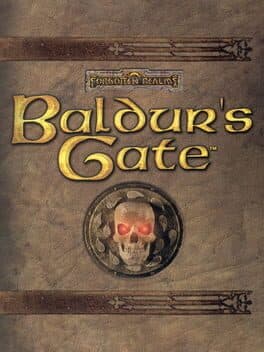
Baldur's Gate
Can your GPU run this game?
Estimated FPS across quality settings and resolutions
Search for your GPU above to see a full FPS breakdown at every quality and resolution.
Baldur's Gate FPS by GPU
Estimated framerates for 14 reference GPUs · pick a resolution and quality
Full benchmark grid · 14 GPUs × 4 qualities × 3 resolutions
1080p performance
| GPU | low | medium | high | ultra |
|---|---|---|---|---|
| RTX 5090 | 999 fps | 999 fps | 999 fps | 999 fps |
| RTX 4090 | 999 fps | 999 fps | 999 fps | 999 fps |
| RX 7900 XTX | 999 fps | 999 fps | 999 fps | 999 fps |
| RTX 5080 | 999 fps | 999 fps | 999 fps | 999 fps |
| RTX 4080 Super | 999 fps | 999 fps | 999 fps | 999 fps |
| RTX 4070 Ti | 999 fps | 999 fps | 999 fps | 937 fps |
| RTX 4070 | 999 fps | 999 fps | 988 fps | 803 fps |
| RX 7800 XT | 999 fps | 999 fps | 871 fps | 707 fps |
| RTX 3080 | 999 fps | 999 fps | 847 fps | 688 fps |
| RTX 4060 Ti | 999 fps | 999 fps | 800 fps | 650 fps |
| RTX 3070 | 999 fps | 912 fps | 729 fps | 593 fps |
| RTX 4060 | 999 fps | 824 fps | 659 fps | 535 fps |
| RTX 3060 | 882 fps | 706 fps | 565 fps | 459 fps |
| GTX 1660 Super | 640 fps | 512 fps | 409 fps | 333 fps |
1440p performance
| GPU | low | medium | high | ultra |
|---|---|---|---|---|
| RTX 5090 | 999 fps | 999 fps | 999 fps | 999 fps |
| RTX 4090 | 999 fps | 999 fps | 999 fps | 999 fps |
| RX 7900 XTX | 999 fps | 999 fps | 999 fps | 999 fps |
| RTX 5080 | 999 fps | 999 fps | 999 fps | 946 fps |
| RTX 4080 Super | 999 fps | 999 fps | 999 fps | 889 fps |
| RTX 4070 Ti | 999 fps | 999 fps | 865 fps | 703 fps |
| RTX 4070 | 999 fps | 926 fps | 741 fps | 602 fps |
| RX 7800 XT | 999 fps | 816 fps | 653 fps | 531 fps |
| RTX 3080 | 993 fps | 794 fps | 635 fps | 516 fps |
| RTX 4060 Ti | 938 fps | 750 fps | 600 fps | 488 fps |
| RTX 3070 | 855 fps | 684 fps | 547 fps | 444 fps |
| RTX 4060 | 772 fps | 618 fps | 494 fps | 401 fps |
| RTX 3060 | 662 fps | 529 fps | 424 fps | 344 fps |
| GTX 1660 Super | 480 fps | 384 fps | 307 fps | 249 fps |
4K performance
| GPU | low | medium | high | ultra |
|---|---|---|---|---|
| RTX 5090 | 999 fps | 988 fps | 791 fps | 642 fps |
| RTX 4090 | 999 fps | 918 fps | 734 fps | 596 fps |
| RX 7900 XTX | 999 fps | 824 fps | 659 fps | 535 fps |
| RTX 5080 | 971 fps | 776 fps | 621 fps | 505 fps |
| RTX 4080 Super | 912 fps | 729 fps | 584 fps | 474 fps |
| RTX 4070 Ti | 721 fps | 576 fps | 461 fps | 375 fps |
| RTX 4070 | 618 fps | 494 fps | 395 fps | 321 fps |
| RX 7800 XT | 544 fps | 435 fps | 348 fps | 283 fps |
| RTX 3080 | 529 fps | 424 fps | 339 fps | 275 fps |
| RTX 4060 Ti | 500 fps | 400 fps | 320 fps | 260 fps |
| RTX 3070 | 456 fps | 365 fps | 292 fps | 237 fps |
| RTX 4060 | 412 fps | 329 fps | 264 fps | 214 fps |
| RTX 3060 | 353 fps | 282 fps | 226 fps | 184 fps |
| GTX 1660 Super | 256 fps | 205 fps | 164 fps | 133 fps |
Where to buy
Baldur's Gate
affiliate
Minimum Hardware
* Amazon links are affiliate links. We may earn a commission at no extra cost to you.
Genres
About
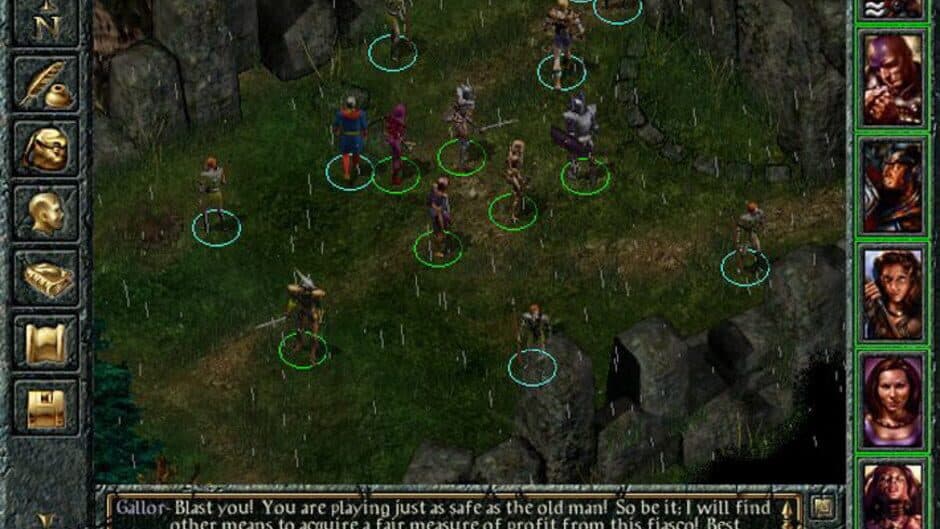
Baldur's Gate, released in 1998, is a landmark in the role-playing game (RPG) genre, developed by BioWare and set in the expansive world of the Forgotten Realms. Notable for being the first to use the Infinity Engine, it brought rich narrative depth, complex character interactions, and strategic combat based on the Advanced Dungeons & Dragons (AD&D) 2nd Edition rules. Its engaging story and intricate gameplay have made it a beloved classic among RPG enthusiasts.
From a performance standpoint, Baldur's Gate is quite accessible, running smoothly even on entry-level GPUs with a minimum benchmark score of around 300. Players can expect stable FPS with older hardware, and for a more seamless experience, a mid-tier GPU, like those from the GeForce GTX 900 series or equivalent, could significantly enhance graphics settings without sacrificing performance. Whether you are looking for a nostalgic experience or diving into it for the first time, the game is unlikely to be demanding on modern systems.
If you're a fan of RPGs or looking for a critically acclaimed classic, Baldur's Gate is definitely worth your time, as evidenced by its solid rating of 86/100. Its combination of deep storytelling and strategic gameplay creates an engaging experience that continues to resonate with players even decades after its release.
Performance profile
Released in December 1998, Baldur's Gate predates modern GPU acceleration as we know it today. It runs effortlessly on virtually any current hardware, including integrated graphics and entry-level laptops — framerate is limited by the engine, not the GPU.
RPGs like Baldur's Gate stress VRAM during long sessions — texture streaming, mods and open-world traversal inflate memory use over time. 8 GB VRAM is a practical floor; 12 GB+ is worth the headroom at 1440p and above.
Extremely light — Baldur's Gate runs at 60 FPS 1080p on any integrated GPU (Intel Iris Xe, AMD Radeon Graphics) or a decade-old discrete card like the GTX 1050. A current-gen RTX 4060 pushes 4K Ultra without effort.
Storyline
Candlekeep is an ancient fortress situated on the rural Sword Coast. Recently, inexplicable events have been plaguing this quiet place, which has long become a large library where men of wisdom and knowledge can study in peace. Unknown mercenaries try to enter the walls of Candlekeep, interested in a seemingly ordinary and unimportant young person - an orphan who was taken in by the mage Gorion and treated by him as his own child. One night, Gorion decides to leave Candlekeep and take his adopted child to a safe place. However, as they leave the fortress, they are ambushed by a group of assassins. The orphan manages to escape, but Gorion dies in battle. The gates of Candlekeep are locked, because its inhabitants are afraid to attract to themselves the wrath of the mysterious attackers. Only Imoen, another child who was brought up by Gorion and has been like a sister to the protagonist, is willing to share the uncertain future. The two have nothing, no place to call their home, only a wide hostile world in front of them. A long and perilous journey begins there. Baldur's Gate is a role-playing game that uses the rule set of Advanced Dungeons & Dragons (AD&D). Set in the universe of Forgotten Realms, the game is the first part of the saga that lets the player explore various towns, wilderness areas and dungeons, undertake many side quests, and find companions for the long journey. The player creates the hero(ine) by selecting his or her class, choosing between fighter, thief, mage, priest, ranger, and druid (including sub-classes, dual- and multi-class characters); alignment (Good-Evil and Lawful-Chaotic axis), and weapon proficiencies. The 2nd edition AD&D rules are applied in the game during combat, character leveling, class restrictions, etc. Up to six player-controlled characters can participate in combat. Battles occur in the same environment as exploration, and flow in real time, though the player is able to pause combat at any time to issue precise commands to any of the characters. Once the game is unpaused, the characters repeat the last action selected by the player until it is changed or becomes impossible to execute. Characters can freely move during battles; party formation and positioning in combat play a significant role.