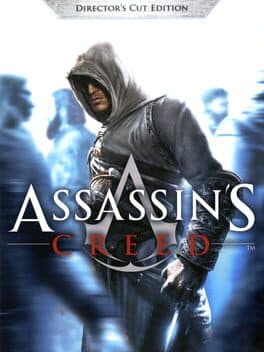
Assassin's Creed: Director's Cut Edition
Can your GPU run this game?
Estimated FPS across quality settings and resolutions
Search for your GPU above to see a full FPS breakdown at every quality and resolution.
Assassin's Creed: Director's Cut Edition FPS by GPU
Estimated framerates for 14 reference GPUs · pick a resolution and quality
Full benchmark grid · 14 GPUs × 4 qualities × 3 resolutions
1080p performance
| GPU | low | medium | high | ultra |
|---|---|---|---|---|
| RTX 5090 | 778 fps | 623 fps | 498 fps | 405 fps |
| RTX 4090 | 723 fps | 578 fps | 463 fps | 376 fps |
| RX 7900 XTX | 649 fps | 519 fps | 415 fps | 337 fps |
| RTX 5080 | 612 fps | 489 fps | 391 fps | 318 fps |
| RTX 4080 Super | 574 fps | 460 fps | 368 fps | 299 fps |
| RTX 4070 Ti | 454 fps | 363 fps | 291 fps | 236 fps |
| RTX 4070 | 389 fps | 311 fps | 249 fps | 202 fps |
| RX 7800 XT | 343 fps | 274 fps | 219 fps | 178 fps |
| RTX 3080 | 334 fps | 267 fps | 213 fps | 173 fps |
| RTX 4060 Ti | 315 fps | 252 fps | 202 fps | 164 fps |
| RTX 3070 | 287 fps | 230 fps | 184 fps | 149 fps |
| RTX 4060 | 259 fps | 208 fps | 166 fps | 135 fps |
| RTX 3060 | 222 fps | 178 fps | 142 fps | 116 fps |
| GTX 1660 Super | 161 fps | 129 fps | 103 fps | 84 fps |
1440p performance
| GPU | low | medium | high | ultra |
|---|---|---|---|---|
| RTX 5090 | 584 fps | 467 fps | 374 fps | 304 fps |
| RTX 4090 | 542 fps | 434 fps | 347 fps | 282 fps |
| RX 7900 XTX | 486 fps | 389 fps | 311 fps | 253 fps |
| RTX 5080 | 459 fps | 367 fps | 294 fps | 239 fps |
| RTX 4080 Super | 431 fps | 345 fps | 276 fps | 224 fps |
| RTX 4070 Ti | 341 fps | 272 fps | 218 fps | 177 fps |
| RTX 4070 | 292 fps | 234 fps | 187 fps | 152 fps |
| RX 7800 XT | 257 fps | 206 fps | 165 fps | 134 fps |
| RTX 3080 | 250 fps | 200 fps | 160 fps | 130 fps |
| RTX 4060 Ti | 236 fps | 189 fps | 151 fps | 123 fps |
| RTX 3070 | 215 fps | 172 fps | 138 fps | 112 fps |
| RTX 4060 | 195 fps | 156 fps | 125 fps | 101 fps |
| RTX 3060 | 167 fps | 133 fps | 107 fps | 87 fps |
| GTX 1660 Super | 121 fps | 97 fps | 77 fps | 63 fps |
4K performance
| GPU | low | medium | high | ultra |
|---|---|---|---|---|
| RTX 5090 | 311 fps | 249 fps | 199 fps | 162 fps |
| RTX 4090 | 289 fps | 231 fps | 185 fps | 150 fps |
| RX 7900 XTX | 259 fps | 208 fps | 166 fps | 135 fps |
| RTX 5080 | 245 fps | 196 fps | 157 fps | 127 fps |
| RTX 4080 Super | 230 fps | 184 fps | 147 fps | 119 fps |
| RTX 4070 Ti | 182 fps | 145 fps | 116 fps | 94 fps |
| RTX 4070 | 156 fps | 125 fps | 100 fps | 81 fps |
| RX 7800 XT | 137 fps | 110 fps | 88 fps | 71 fps |
| RTX 3080 | 133 fps | 107 fps | 85 fps | 69 fps |
| RTX 4060 Ti | 126 fps | 101 fps | 81 fps | 66 fps |
| RTX 3070 | 115 fps | 92 fps | 74 fps | 60 fps |
| RTX 4060 | 104 fps | 83 fps | 66 fps | 54 fps |
| RTX 3060 | 89 fps | 71 fps | 57 fps | 46 fps |
| GTX 1660 Super | 64 fps | 52 fps | 41 fps | 34 fps |
Where to buy
Assassin's Creed: Director's Cut Edition
affiliate
$19.99
$4.99
-75% off
Minimum Hardware
* Amazon links are affiliate links. We may earn a commission at no extra cost to you.
Genres
About
Assassin's Creed: Director's Cut Edition (2008) is a non-linear action-adventure game that puts you in control of Altaïr Ibn-La'Ahad, a 12th-century Levantine Assassin during the Third Crusade. The game's standout feature is its innovative blend of stealth, combat, and parkour-style movement across historically-inspired environments. This Director's Cut adds four PC-exclusive memories including the Rooftop Race Challenge, expanding the original experience with additional content tailored for PC players.
The Director's Cut Edition is quite accessible by modern standards, running smoothly on modest hardware from the mid-2000s era. You'll see solid FPS performance on entry-level GPUs, with even integrated graphics capable of handling the game at playable framerates. Most benchmark testing shows consistent performance across lower-end systems, making this an excellent title for baseline performance comparisons on budget GPU hardware.
With a respectable 70/100 rating, Assassin's Creed remains a worthwhile action-adventure experience that established many conventions still used in gaming today. If you enjoy historical settings and stealth-based gameplay, the Director's Cut Edition offers excellent value and an interesting look at how the franchise began.
Performance profile
April 2008 release. Assassin's Creed: Director's Cut Edition targets mid-2000s-to-early-2010s hardware — any modern entry-level GPU (GTX 1650 tier or newer integrated graphics) handles it at 1080p Ultra without breaking a sweat.
Assassin's Creed: Director's Cut Edition is a narrative-driven experience — a rock-solid 60 FPS is plenty. Prioritise resolution and image quality (AA, anisotropic filtering) over chasing high-refresh framerates.
Entry-level hardware target. A GTX 1650 or RX 6500 XT reaches 60 FPS at 1080p Medium in Assassin's Creed: Director's Cut Edition; an RTX 4060 comfortably sustains 1440p Ultra. 4K Ultra 60 FPS needs an RTX 4070 or better.
Storyline
Desmond Miles, a bartender, is kidnapped by the company Abstergo Industries for use as a test subject in the "Animus," a device that can simulate genetic memory. Abstergo intends to put Desmond in the device to recall the memories of his ancestor, Altaïr Ibn-La'Ahad, a member of the Assassin Brotherhood in the year 1191, who lived during the Third Crusade in the Holy Land. Initially, Desmond has trouble adjusting to the device, but eventually relives Altaïr's exploits over the next several days. The game then primarily changes to Altaïr's point-of-view, with occasional transitions to Desmond, due to problems with the Animus or onset of the Bleeding Effect. The game opens with Desmond entering Altaïr's memory, but he soon faces synchronization problems. On this, Lucy Stillman and Warren Vidic's voices can be heard, arguing over Desmond's safety within the Animus. After experiencing a few problems, Desmond exits the virtual machine and Vidic briefs him about the Animus' inner workings, before initializing the machine's tutorial program. After Desmond is done with the tutorial, he enters the closest synchronizable memory of Altaïr; Lucy adds that Desmond has to relive key moments of Altaïr's life to increase his synchronization, before reaching the final memory which holds the information that Abstergo is seeking. Altaïr is first shown attempting to retrieve one of a series of artifacts known as the "Pieces of Eden" from Solomon's Temple with the help of Malik Al-Sayf, and his brother Kadar, but they are stopped by Robert de Sablé, Grand Master of the Knights Templar and sworn enemy of the Assassins. While retrieving the treasure, Altaïr breaks all three tenets of the Assassins' Creed in an attempt to kill Robert, but he ultimately fails. In the following commotion, Malik's brother is killed, and Malik's left arm is crippled and later amputated. When Altaïr returns to the Assassins' stronghold at Masyaf with apologies, Malik, who survived de Sablé, comes back with the artifact and disparages Altaïr because of his arrogance. After narrowly defeating a retaliatory attack by the Templars, Al Mualim, leader of the Assassins, demotes Altaïr to a novice but gives him another chance to rise through the ranks of the Brotherhood. Al Mualim assigns Altaïr the task of assassinating nine key figures across the Holy Land in Jerusalem, Acre and Damascus, aiming to bring peace between the Crusader and Saracen forces. Each target is based on an actual historical figure from the Third Crusade, including Majd Addin, Garnier de Naplouse, Jubair al Hakim, Abu'l Nuqoud, Sibrand, William of Montferrat, and Robert de Sablé. Altaïr completes each task, learning how each target is connected to Robert and the Templars and how together they aim to end the Crusades and place the Holy Land under their own control. With men on both sides killed, he discovers that Robert's last plot is to attempt to unite the Christian and Muslim forces against their new common enemy, the Assassins themselves. Altaïr defeats de Sablé before Richard the Lionheart, failing to convince the King that an end to the war would be welcome to both sides, but ending Robert's plot. From de Sablé, Altaïr discovers that Al Mualim was himself a member of the Templars and used the Assassin to kill the other members who held the secret to the treasure's power, so that he could selfishly keep the artifact for himself. Altaïr quickly returns to Masyaf and approaches his master, who reveals the truth to him: the Piece of Eden, which he had recovered through the help of Altaïr directly before his transgression, creates illusions. He denounces religion and other seemingly supernatural events (e.g. the Ten Plagues of Egypt, the parting of the Red Sea, and the presence of the Greek Gods in the Trojan War) as illusions caused by the Piece, and then states his intention to use the artifact to compel mankind into a brainwashed state, and in doing so, bringing an end to all conflict; Altaïr is eventually able to see through the deceptions created by the artifact to kill Al Mualim. When Altaïr recovers the artifact, the Piece of Eden activates, showing a holographic view of the world with numerous locations of other Pieces of Eden marked across the globe. When the process is complete, Desmond learns that Abstergo is a modern-day front of the Templars, and they are already seeking other artifacts at locations identified in Altaïr's memories. Further, he learns that the modern-day Assassins had tried to rescue him before the memory had completed but had failed. Following this, Desmond was to be killed after an order from a high-ranking Templar, Alan Rikkin, but Lucy Stillman saves him from death and, at one point, tucks her ring finger into her palm, referring to the Assassins' tradition of cutting off the finger. Though Desmond remains trapped in the Abstergo laboratory, his experience in the Animus has created a Bleeding Effect of Altaïr's life in his own, allowing Desmond to use Altaïr's Eagle Vision, which, in turn, allows him to see strange messages painted on the walls of his room and the floor of the lab. The messages all deal with various forms of the end of the world from different cultures, including several references to 21 December 2012, the date that Abstergo plans to launch a satellite that will "permanently end the war." It is hinted that this method would be by the same method that Al Mualim hypnotized Masyaf, only on a larger scale. Finally, the game ends with Desmond wondering what the images all mean and who could have drawn them.