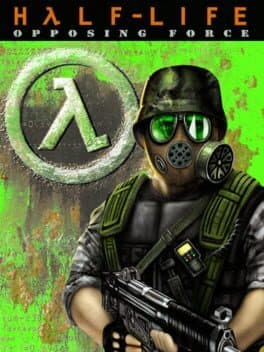
Half-Life: Opposing Force
Can your GPU run this game?
Estimated FPS across quality settings and resolutions
Search for your GPU above to see a full FPS breakdown at every quality and resolution.
Half-Life: Opposing Force FPS by GPU
Estimated framerates for 14 reference GPUs · pick a resolution and quality
Full benchmark grid · 14 GPUs × 4 qualities × 3 resolutions
1080p performance
| GPU | low | medium | high | ultra |
|---|---|---|---|---|
| RTX 5090 | 999 fps | 999 fps | 999 fps | 999 fps |
| RTX 4090 | 999 fps | 999 fps | 999 fps | 999 fps |
| RX 7900 XTX | 999 fps | 999 fps | 999 fps | 999 fps |
| RTX 5080 | 999 fps | 999 fps | 999 fps | 999 fps |
| RTX 4080 Super | 999 fps | 999 fps | 999 fps | 999 fps |
| RTX 4070 Ti | 999 fps | 999 fps | 999 fps | 838 fps |
| RTX 4070 | 999 fps | 999 fps | 884 fps | 718 fps |
| RX 7800 XT | 999 fps | 974 fps | 779 fps | 633 fps |
| RTX 3080 | 999 fps | 947 fps | 758 fps | 616 fps |
| RTX 4060 Ti | 999 fps | 895 fps | 716 fps | 582 fps |
| RTX 3070 | 999 fps | 816 fps | 653 fps | 530 fps |
| RTX 4060 | 921 fps | 737 fps | 589 fps | 479 fps |
| RTX 3060 | 789 fps | 632 fps | 505 fps | 411 fps |
| GTX 1660 Super | 572 fps | 458 fps | 366 fps | 298 fps |
1440p performance
| GPU | low | medium | high | ultra |
|---|---|---|---|---|
| RTX 5090 | 999 fps | 999 fps | 999 fps | 999 fps |
| RTX 4090 | 999 fps | 999 fps | 999 fps | 999 fps |
| RX 7900 XTX | 999 fps | 999 fps | 999 fps | 898 fps |
| RTX 5080 | 999 fps | 999 fps | 999 fps | 847 fps |
| RTX 4080 Super | 999 fps | 999 fps | 979 fps | 795 fps |
| RTX 4070 Ti | 999 fps | 967 fps | 774 fps | 629 fps |
| RTX 4070 | 999 fps | 829 fps | 663 fps | 539 fps |
| RX 7800 XT | 913 fps | 730 fps | 584 fps | 475 fps |
| RTX 3080 | 888 fps | 711 fps | 568 fps | 462 fps |
| RTX 4060 Ti | 839 fps | 671 fps | 537 fps | 436 fps |
| RTX 3070 | 765 fps | 612 fps | 489 fps | 398 fps |
| RTX 4060 | 691 fps | 553 fps | 442 fps | 359 fps |
| RTX 3060 | 592 fps | 474 fps | 379 fps | 308 fps |
| GTX 1660 Super | 429 fps | 343 fps | 275 fps | 223 fps |
4K performance
| GPU | low | medium | high | ultra |
|---|---|---|---|---|
| RTX 5090 | 999 fps | 884 fps | 707 fps | 575 fps |
| RTX 4090 | 999 fps | 821 fps | 657 fps | 534 fps |
| RX 7900 XTX | 921 fps | 737 fps | 589 fps | 479 fps |
| RTX 5080 | 868 fps | 695 fps | 556 fps | 452 fps |
| RTX 4080 Super | 816 fps | 653 fps | 522 fps | 424 fps |
| RTX 4070 Ti | 645 fps | 516 fps | 413 fps | 335 fps |
| RTX 4070 | 553 fps | 442 fps | 354 fps | 287 fps |
| RX 7800 XT | 487 fps | 389 fps | 312 fps | 253 fps |
| RTX 3080 | 474 fps | 379 fps | 303 fps | 246 fps |
| RTX 4060 Ti | 447 fps | 358 fps | 286 fps | 233 fps |
| RTX 3070 | 408 fps | 326 fps | 261 fps | 212 fps |
| RTX 4060 | 368 fps | 295 fps | 236 fps | 192 fps |
| RTX 3060 | 316 fps | 253 fps | 202 fps | 164 fps |
| GTX 1660 Super | 229 fps | 183 fps | 147 fps | 119 fps |
Where to buy
Half-Life: Opposing Force
affiliate
from
$4.99
Minimum Hardware
* Amazon links are affiliate links. We may earn a commission at no extra cost to you.
Genres
About
Half-Life: Opposing Force, released in 1999, is a notable action game that expands upon the iconic narrative of its predecessor, Half-Life. Players assume the role of U.S. Marine Adrian Shephard, tasked with quelling the chaos unleashed at the Black Mesa Research Facility following an alien invasion. This unique perspective allows for fresh gameplay mechanics and a riveting storyline that enhances the original experience.
When it comes to PC performance, Half-Life: Opposing Force is quite accessible. Minimum GPU requirements are modest, with entry-level graphics cards scoring around 600 still capable of delivering satisfactory frames per second (FPS). Players can expect smooth gameplay even on older hardware, making it an excellent choice for those looking to enjoy the game without heavy demands on their systems. Adjusting graphics settings can further optimize performance, ensuring a good benchmark for various setups.
If you enjoy action-packed gameplay and captivating narratives, Half-Life: Opposing Force is definitely worth your time. With a solid rating of 80/100, its engaging mechanics and nostalgic charm make it a classic that continues to resonate with gamers today. Simply put, if you're a fan of the genre or the original game, this expansion is a must-play.
Performance profile
Released in November 1999, Half-Life: Opposing Force predates modern GPU acceleration as we know it today. It runs effortlessly on virtually any current hardware, including integrated graphics and entry-level laptops — framerate is limited by the engine, not the GPU.
Action titles like Half-Life: Opposing Force reward high framerates for visual clarity during combat. A mid-range modern GPU at 1440p 60–120 FPS is the practical sweet spot; VRR (G-Sync/FreeSync) smooths out drops during heavy effects.
Extremely light — Half-Life: Opposing Force runs at 60 FPS 1080p on any integrated GPU (Intel Iris Xe, AMD Radeon Graphics) or a decade-old discrete card like the GTX 1050. A current-gen RTX 4060 pushes 4K Ultra without effort.
Storyline
Opposing Force opens with Shephard riding on a V-22 Osprey with his squad. His squad discuss their deployment, somewhat irritated that they have not been told what they are being deployed for. However, as they are nearing their Landing Zone at Black Mesa, airborne alien creatures attack the Osprey formation, causing Shephard's Osprey to crash land. Shephard regains consciousness in a Black Mesa medical bay, tended to by the science team, learning that the Marines are being steadily beaten by the alien forces from Xen and orders have come through to pull out. Consequently, Shephard departs to reach an extraction point and escape the facility. However, Shephard is prevented from reaching the extraction point by the enigmatic G-Man, forcing the evacuation craft to leave without him. Other Marines who have also been left behind team up with Shephard and attempt to reach another extraction point near Black Mesa's Lambda Complex, but en route they come under attack from black operations units seeking to thoroughly contain the situation and eliminate all survivors. Shephard makes it to the Lambda Complex alive, and briefly sees Gordon Freeman as the latter teleports to Xen in the final stages of Half-Life. To escape the teleportation chamber, Shephard is forced to enter a separate portal, briefly taking him to Xen before depositing him in an entirely different area of the facility. The facility is now heavily damaged, and it soon becomes clear that a new alien race, Race X, has exploited the situation to mount a localized invasion, attacking both human and Xen forces in Black Mesa indiscriminately. Fighting between the black operations units and Race X quickly intensifies. Shephard soon encounters more stranded Marine units in the wreckage of the base, and tries to break through the black operations units to reach an escape point past the facility's storage unit, but meets heavy resistance from both Race X and the black operations units. A surviving Black Mesa security guard reveals to Shephard that the black operators intend to detonate a tactical nuclear weapon in the base, thereby totally sealing it off and killing everything in it. After successfully neutralizing the guarding black operations unit, Shephard disarms the device and proceeds to the nearby storage areas, intent on escape. However, the G-Man rearms the device as Shephard departs. The storage unit has become a thick battleground between Race X and the black operation units, and although Shephard manages to evade them, he is informed by another security guard that something very large is coming through an alien portal blocking the exit path. At the portal, Shephard discovers a gene worm, a massive creature facilitating the Race X invasion. Shephard is able to kill the creature, but just afterwards he is teleported onto an Osprey by the G-Man. As the G-Man congratulates Shephard on his accomplishments, the nuclear device detonates in the background, destroying Black Mesa. The game closes with the G-Man detaining Shephard someplace where he can tell no one of what he has seen and cannot be harmed, pending further evaluation.