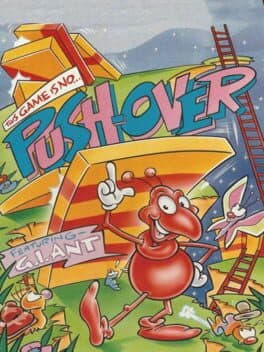
Pushover
Can your GPU run this game?
Estimated FPS across quality settings and resolutions
Search for your GPU above to see a full FPS breakdown at every quality and resolution.
Pushover FPS by GPU
Estimated framerates for 14 reference GPUs · pick a resolution and quality
Full benchmark grid · 14 GPUs × 4 qualities × 3 resolutions
1080p performance
| GPU | low | medium | high | ultra |
|---|---|---|---|---|
| RTX 5090 | 999 fps | 999 fps | 999 fps | 999 fps |
| RTX 4090 | 999 fps | 999 fps | 999 fps | 999 fps |
| RX 7900 XTX | 999 fps | 999 fps | 999 fps | 999 fps |
| RTX 5080 | 999 fps | 999 fps | 999 fps | 999 fps |
| RTX 4080 Super | 999 fps | 999 fps | 999 fps | 999 fps |
| RTX 4070 Ti | 999 fps | 999 fps | 999 fps | 937 fps |
| RTX 4070 | 999 fps | 999 fps | 988 fps | 803 fps |
| RX 7800 XT | 999 fps | 999 fps | 871 fps | 707 fps |
| RTX 3080 | 999 fps | 999 fps | 847 fps | 688 fps |
| RTX 4060 Ti | 999 fps | 999 fps | 800 fps | 650 fps |
| RTX 3070 | 999 fps | 912 fps | 729 fps | 593 fps |
| RTX 4060 | 999 fps | 824 fps | 659 fps | 535 fps |
| RTX 3060 | 882 fps | 706 fps | 565 fps | 459 fps |
| GTX 1660 Super | 640 fps | 512 fps | 409 fps | 333 fps |
1440p performance
| GPU | low | medium | high | ultra |
|---|---|---|---|---|
| RTX 5090 | 999 fps | 999 fps | 999 fps | 999 fps |
| RTX 4090 | 999 fps | 999 fps | 999 fps | 999 fps |
| RX 7900 XTX | 999 fps | 999 fps | 999 fps | 999 fps |
| RTX 5080 | 999 fps | 999 fps | 999 fps | 946 fps |
| RTX 4080 Super | 999 fps | 999 fps | 999 fps | 889 fps |
| RTX 4070 Ti | 999 fps | 999 fps | 865 fps | 703 fps |
| RTX 4070 | 999 fps | 926 fps | 741 fps | 602 fps |
| RX 7800 XT | 999 fps | 816 fps | 653 fps | 531 fps |
| RTX 3080 | 993 fps | 794 fps | 635 fps | 516 fps |
| RTX 4060 Ti | 938 fps | 750 fps | 600 fps | 488 fps |
| RTX 3070 | 855 fps | 684 fps | 547 fps | 444 fps |
| RTX 4060 | 772 fps | 618 fps | 494 fps | 401 fps |
| RTX 3060 | 662 fps | 529 fps | 424 fps | 344 fps |
| GTX 1660 Super | 480 fps | 384 fps | 307 fps | 249 fps |
4K performance
| GPU | low | medium | high | ultra |
|---|---|---|---|---|
| RTX 5090 | 999 fps | 988 fps | 791 fps | 642 fps |
| RTX 4090 | 999 fps | 918 fps | 734 fps | 596 fps |
| RX 7900 XTX | 999 fps | 824 fps | 659 fps | 535 fps |
| RTX 5080 | 971 fps | 776 fps | 621 fps | 505 fps |
| RTX 4080 Super | 912 fps | 729 fps | 584 fps | 474 fps |
| RTX 4070 Ti | 721 fps | 576 fps | 461 fps | 375 fps |
| RTX 4070 | 618 fps | 494 fps | 395 fps | 321 fps |
| RX 7800 XT | 544 fps | 435 fps | 348 fps | 283 fps |
| RTX 3080 | 529 fps | 424 fps | 339 fps | 275 fps |
| RTX 4060 Ti | 500 fps | 400 fps | 320 fps | 260 fps |
| RTX 3070 | 456 fps | 365 fps | 292 fps | 237 fps |
| RTX 4060 | 412 fps | 329 fps | 264 fps | 214 fps |
| RTX 3060 | 353 fps | 282 fps | 226 fps | 184 fps |
| GTX 1660 Super | 256 fps | 205 fps | 164 fps | 133 fps |
Where to buy
Pushover
affiliate
from
$8.99
Minimum Hardware
* Amazon links are affiliate links. We may earn a commission at no extra cost to you.
Genres
About
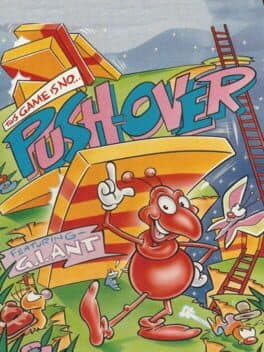
"Pushover," released in 1992, is a unique adventure puzzle game developed by Red Rat Software. Set in a vibrant world sponsored by Smiths' Quavers, the game's storyline revolves around the character Colin Curly as he navigates challenges after losing packets of Quavers down an ant hill. Players engage in strategic gameplay where they manipulate domino-like objects to solve puzzles and advance through various levels, making it a notable entry in the puzzle genre.
When it comes to PC performance, "Pushover" is quite accessible, requiring only an entry-level GPU with a minimum score around 300 to achieve smooth gameplay. This means that even older systems can run it effectively, allowing players to experience the game without needing high-end hardware. Expect FPS rates that hold steady across lower graphics settings, making it easy to enjoy the game without any significant performance-related concerns.
Given its average rating of 60/100 and its charming puzzle design, "Pushover" can still be an enjoyable experience for fans of strategic gameplay. While it may not be groundbreaking by today's standards, players who appreciate adventure and puzzle elements will find value in this nostalgic title.
Performance profile
Released in December 1992, Pushover predates modern GPU acceleration as we know it today. It runs effortlessly on virtually any current hardware, including integrated graphics and entry-level laptops — framerate is limited by the engine, not the GPU.
As a strategy title, Pushover is typically CPU-bound rather than GPU-bound — single-thread CPU performance dictates framerate during large-scale battles, end-game saves and late-game AI turns. A fast modern 6-core will help more than a GPU upgrade.
Extremely light — Pushover runs at 60 FPS 1080p on any integrated GPU (Intel Iris Xe, AMD Radeon Graphics) or a decade-old discrete card like the GTX 1050. A current-gen RTX 4060 pushes 4K Ultra without effort.
Storyline
The game consists of 100 levels of increasing complexity over nine different themed worlds. Each level features several interconnected platforms holding a number of "dominoes". The aim is to rearrange the dominoes, such that with a single push, all of the dominoes are toppled, thus opening the exit to the next level. There are 11 different types of domino, identified by red and yellow patterns, each with different actions. The player controls G.I. Ant, who can move certain dominoes by carrying them one at a time. Various factors can result in failure to complete a level. As well as toppling all of the dominoes, the player must be able to access the exit door once the dominoes have fallen. For instance, the player will be unable to reach the exit if a ledge leading to the exit has been destroyed, or if a gap leading to the exit has not been bridged, or if a line of dominoes lie across the exit. G.I. Ant may die by falling from a large height, by falling off the bottom of the screen, or by being crushed under a falling domino. The player is then greeted with the message "You Failed, You Died" and has to restart the level. Also, the level will be failed if any dominoes are destroyed by landing one domino on top of another. Each level has a time limit during which it must be completed. However, if the time runs out the player is still able to continue with the puzzle if they wish. By pausing the game once the time has run out, a small hint will be displayed, giving advice on how to complete the level. As a side note, the hint for level 98 informs the player that the game's designer cannot remember how to complete the level without trickery ("Use a drop! There is a way to make it work with a push, but I can't find it!"). The themed worlds, in order, are an industrial complex, an Aztec world, a space station, an electronic world, a Greek temple, a Medieval castle, a Meccano-inspired world, a dungeon and a Japanese temple. Each world has 11 levels, making a total of 99 regular levels. A packet of Colin's Quavers is retrieved after each world, with nine packets in all to be collected. Many of the early levels are tutorials demonstrating how each type of domino will act. Often there is only a single solution to each level, though some levels have multiple solutions. The final level, level 100, must be completed using dominoes with hidden markings. A password system allows the player to continue an earlier game, without having to restart from the first level. Additionally, upon completing a level the player gains a token, which once a level has been failed, allows the player to return to the point before the domino push, rather than having to return to the initial state of the level.