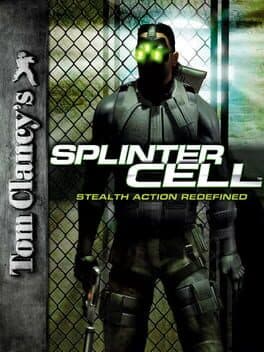
Tom Clancy's Splinter Cell
Can your GPU run this game?
Estimated FPS across quality settings and resolutions
Search for your GPU above to see a full FPS breakdown at every quality and resolution.
Tom Clancy's Splinter Cell FPS by GPU
Estimated framerates for 14 reference GPUs · pick a resolution and quality
Full benchmark grid · 14 GPUs × 4 qualities × 3 resolutions
1080p performance
| GPU | low | medium | high | ultra |
|---|---|---|---|---|
| RTX 5090 | 999 fps | 999 fps | 999 fps | 999 fps |
| RTX 4090 | 999 fps | 999 fps | 999 fps | 999 fps |
| RX 7900 XTX | 999 fps | 999 fps | 999 fps | 999 fps |
| RTX 5080 | 999 fps | 999 fps | 999 fps | 999 fps |
| RTX 4080 Super | 999 fps | 999 fps | 999 fps | 999 fps |
| RTX 4070 Ti | 999 fps | 999 fps | 999 fps | 937 fps |
| RTX 4070 | 999 fps | 999 fps | 988 fps | 803 fps |
| RX 7800 XT | 999 fps | 999 fps | 871 fps | 707 fps |
| RTX 3080 | 999 fps | 999 fps | 847 fps | 688 fps |
| RTX 4060 Ti | 999 fps | 999 fps | 800 fps | 650 fps |
| RTX 3070 | 999 fps | 912 fps | 729 fps | 593 fps |
| RTX 4060 | 999 fps | 824 fps | 659 fps | 535 fps |
| RTX 3060 | 882 fps | 706 fps | 565 fps | 459 fps |
| GTX 1660 Super | 640 fps | 512 fps | 409 fps | 333 fps |
1440p performance
| GPU | low | medium | high | ultra |
|---|---|---|---|---|
| RTX 5090 | 999 fps | 999 fps | 999 fps | 999 fps |
| RTX 4090 | 999 fps | 999 fps | 999 fps | 999 fps |
| RX 7900 XTX | 999 fps | 999 fps | 999 fps | 999 fps |
| RTX 5080 | 999 fps | 999 fps | 999 fps | 946 fps |
| RTX 4080 Super | 999 fps | 999 fps | 999 fps | 889 fps |
| RTX 4070 Ti | 999 fps | 999 fps | 865 fps | 703 fps |
| RTX 4070 | 999 fps | 926 fps | 741 fps | 602 fps |
| RX 7800 XT | 999 fps | 816 fps | 653 fps | 531 fps |
| RTX 3080 | 993 fps | 794 fps | 635 fps | 516 fps |
| RTX 4060 Ti | 938 fps | 750 fps | 600 fps | 488 fps |
| RTX 3070 | 855 fps | 684 fps | 547 fps | 444 fps |
| RTX 4060 | 772 fps | 618 fps | 494 fps | 401 fps |
| RTX 3060 | 662 fps | 529 fps | 424 fps | 344 fps |
| GTX 1660 Super | 480 fps | 384 fps | 307 fps | 249 fps |
4K performance
| GPU | low | medium | high | ultra |
|---|---|---|---|---|
| RTX 5090 | 999 fps | 988 fps | 791 fps | 642 fps |
| RTX 4090 | 999 fps | 918 fps | 734 fps | 596 fps |
| RX 7900 XTX | 999 fps | 824 fps | 659 fps | 535 fps |
| RTX 5080 | 971 fps | 776 fps | 621 fps | 505 fps |
| RTX 4080 Super | 912 fps | 729 fps | 584 fps | 474 fps |
| RTX 4070 Ti | 721 fps | 576 fps | 461 fps | 375 fps |
| RTX 4070 | 618 fps | 494 fps | 395 fps | 321 fps |
| RX 7800 XT | 544 fps | 435 fps | 348 fps | 283 fps |
| RTX 3080 | 529 fps | 424 fps | 339 fps | 275 fps |
| RTX 4060 Ti | 500 fps | 400 fps | 320 fps | 260 fps |
| RTX 3070 | 456 fps | 365 fps | 292 fps | 237 fps |
| RTX 4060 | 412 fps | 329 fps | 264 fps | 214 fps |
| RTX 3060 | 353 fps | 282 fps | 226 fps | 184 fps |
| GTX 1660 Super | 256 fps | 205 fps | 164 fps | 133 fps |
Where to buy
Tom Clancy's Splinter Cell
affiliate
from
$9.99
Minimum Hardware
* Amazon links are affiliate links. We may earn a commission at no extra cost to you.
Genres
About
Tom Clancy's Splinter Cell, released in 2002, is a landmark stealth-action game that defined the tactical espionage genre. You play as Sam Fisher, an elite NSA operative infiltrating terrorist strongholds to gather intelligence and neutralize threats with surgical precision. The game emphasizes stealth, shadows, and careful planning over run-and-gun combat, making it a refreshing alternative to typical action shooters.
This classic title is highly accessible on modern systems, requiring only modest GPU power to achieve smooth performance. Even budget graphics cards from the GTX 1050 generation can deliver solid 60+ FPS at 1080p with medium to high settings. The game's aging engine means that most modern hardware will exceed these benchmarks comfortably, making it an excellent choice for testing baseline performance or enjoying on lower-end builds.
With an 83/100 rating, Splinter Cell remains a must-play for stealth fans and anyone interested in PC gaming history. Its influence on the genre is undeniable, and the tight gameplay mechanics still hold up remarkably well today.
Performance profile
Released in November 2002, Tom Clancy's Splinter Cell comes from the DirectX 9 era. Even the cheapest modern discrete GPU crushes it at maxed-out settings; the only real bottleneck today is CPU single-thread speed on older titles that were never multi-threaded.
Action titles like Tom Clancy's Splinter Cell reward high framerates for visual clarity during combat. A mid-range modern GPU at 1440p 60–120 FPS is the practical sweet spot; VRR (G-Sync/FreeSync) smooths out drops during heavy effects.
Extremely light — Tom Clancy's Splinter Cell runs at 60 FPS 1080p on any integrated GPU (Intel Iris Xe, AMD Radeon Graphics) or a decade-old discrete card like the GTX 1050. A current-gen RTX 4060 pushes 4K Ultra without effort.
Storyline
In April 2004, the President of Georgia is assassinated, allowing Georgian billionaire Kombayn Nikoladze to seize power with a bloodless coup d'état. In August 2004, former U.S. Navy SEAL officer and Gulf War veteran Sam Fisher is recruited by the National Security Agency to work within its newly formed division, "Third Echelon." Working with his old friend Irving Lambert, Fisher is introduced to technical expert Anna "Grim" Grimsdóttír, and field runner Vernon Wilkes Jr. In October 2004, Fisher is dispatched to Tbilisi, Georgia to investigate the disappearance of two CIA officers. Fisher attempts to meet an informant, Thomas Gurgenidze, only to find him dying in a burning building. Gurgenidze warns that one agent's transmission mentioned proof that could cause a war. Finding the agents' corpses in a police morgue, Fisher learns that a former Spetsnaz agent, Vyacheslav Grinko, removed their subdermal tracking implants. Tracking Grinko's license plate number using CCTV, Third Echelon tracks him to the Georgian Ministry of Defense. Fisher arrives at the Ministry, and records a meeting between Grinko and Canadian hacker Phillip Masse, through which he learns that Nikoladze is conducting an illegal operation in Azerbaijan. Fisher hacks Nikoladze's computer, and learns Nikoladze has been waging an ethnic cleansing campaign across Azerbaijan, by deploying Georgian commandos. In retaliation, NATO forces enter Azerbaijan, prompting Nikoladze to go underground. Third Echelon learns that Georgian soldiers stationed on a Caspian oil rig have been exchanging data with the Georgian Presidential Palace. Fisher infiltrates the rig during the middle of a NATO airstrike to apprehend a local technician, Lejava, and retrieve his laptop containing the rig's computer data. After interrogating the technician, Fisher learns that the data contains a file on "The Ark", Fisher recovers his laptop and encryption key and extracts. Examining Lejava's laptop, Grim reveals that the intel could have come from a CIA mole. Lambert then reveals that North America has just been hit by a massive cyber warfare attack, directed primarily against military targets. In a broadcast, Nikoladze claims responsibility for the attack and officially declares war on the United States and its allies. Fisher infiltrates the CIA headquarters and accesses the CIA computer mainframe, allowing Grim to trace the data leak to the computer of Mitchell Dougherty. Captured for interrogation, Dougherty claims ignorance of the leak, but the NSA learns that his obsessive–compulsive disorder caused him to back up data on an insecure laptop, which was exploited by a network owned by Kalinatek, Inc. Georgia-hired mafiosos attempt to remove all traces of Nikoladze from the Kalinatek offices by destroying the building and murdering the staff. Intercepting a 911 call from a technician named Ivan, Fisher is deployed to the building and retrieves Ivan's encryption key while the FBI rescues Ivan. Fisher extracts with the help of Wilkes, who is mortally wounded in the process and later dies. Using the encryption key, the NSA discovers Nikoladze has been using a network of unconventional relays to communicate with Georgian military cells. The NSA traces the full relay network to the Chinese Embassy in Yangon, Myanmar. Worried Chinese support could cause World War III, Fisher sneaks into the embassy and eavesdrops on a conversation between Nikoladze and General Kong Feirong, and learns they are working together. Fisher learns that captured U.S. Army soldiers and high-ranking Chinese officials are in a local slaughterhouse, so he delays interrogating Feirong to save the hostages, who are scheduled to be executed on a live broadcast. Fisher meets with a Chinese official among the hostages, and learns that Feirong is part of a rogue collective not backed by the Chinese government. Fisher is detected, and in a firefight, Fisher kills Grinko. Returning to the embassy, Fisher grabs a drunken Feirong before he can commit suicide, and forces him to share the information stored on his computer; the information reveals Nikoladze has fled back to Georgia, where he is trying to activate a suitcase nuke known as "The Ark". Infiltrating the Georgian Presidential Palace containing Nikoladze and new de facto Georgian president Varlam Cristavi, Fisher attempts to recover the key to the Ark, which has been placed somewhere in the United States. Fisher corners Nikoladze, who bargains to give the Ark key in exchange for safe passage out of Georgia; before Fisher can recover it, Cristavi soldiers take Nikoladze and the Ark key elsewhere. About to be executed, Fisher escapes when Lambert causes a brief blackout. Discovering Nikoladze is offering the Ark's location for protection, Fisher assassinates Nikoladze. Discovering the Ark, the U.S. Army evacuates an apartment complex in Hope Gate, Maryland on claims of a gas leak, and secretly recovers the Ark. Despite World War III being averted, Nikoladze's corpse sparks international backlash due to the suspicious circumstances around his death. Watching the Presidential broadcast on the crisis, Fisher then receives a secure phone call from Lambert for another assignment. [from Wikipedia.org]